
Description
Product Name: Candy Cane Chocolate Cherry
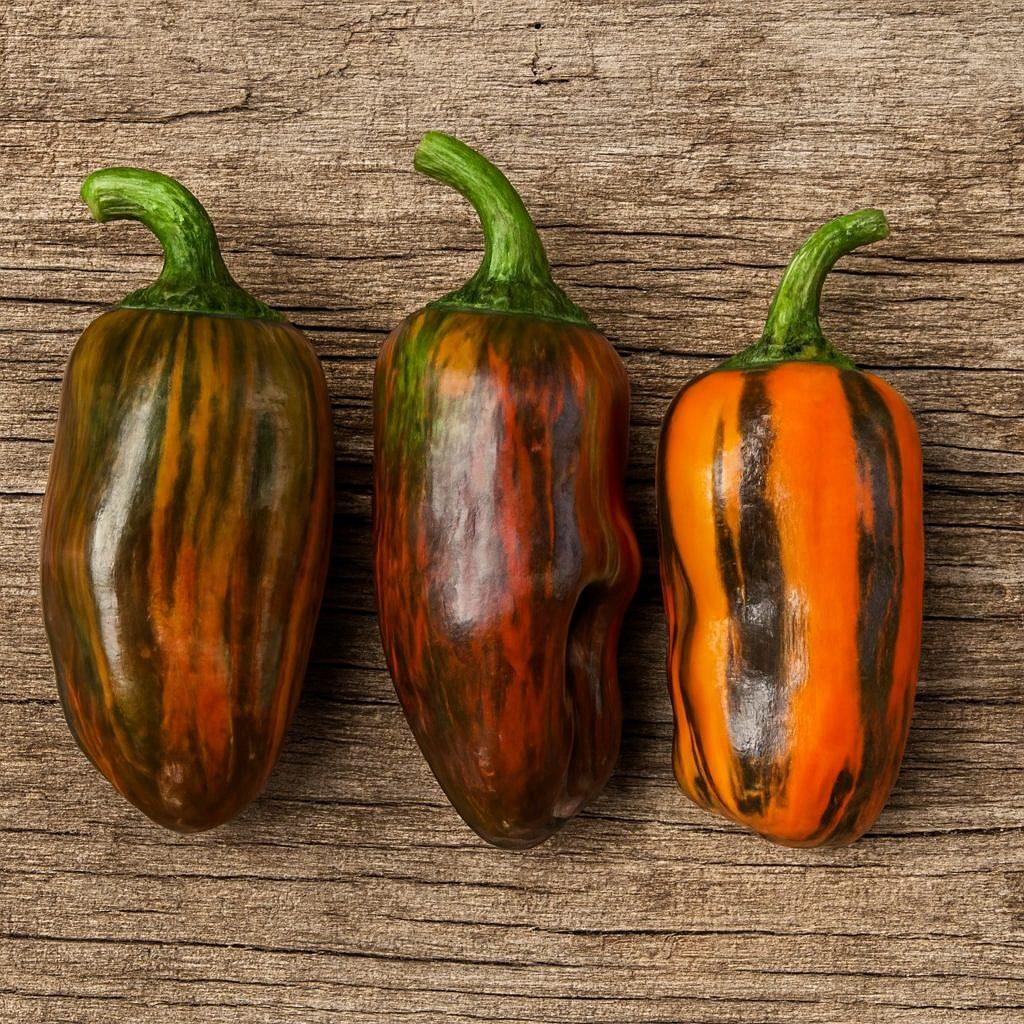
Candy Cane Chocolate Cherry is a visually captivating and sweet-flavored mini bell pepper cultivar that has garnered attention for its ornamental foliage and striking fruit coloration. Developed as a hybrid variety within the Capsicum annuum species, this pepper is prized for its crisp texture, early maturity, and versatility in both raw and cooked applications. Its name reflects the dramatic color transitions observed during ripening, which range from striped green and white to deep chocolate and cherry red. Though it is not a hot pepper, its flavor complexity and aesthetic appeal have made it a favorite among growers, chefs, and garden enthusiasts alike.
- Cultivar Name: Candy Cane Chocolate Cherry
- Species: Capsicum annuum
- Common Names: Mini Bell Candy Cane, Chocolate Cherry Bell
- Type: Hybrid
Origin & Lineage
Geographic Origin:
The Candy Cane Chocolate Cherry was developed in North America, with breeding programs led by Ball Seed and PanAmerican Seed contributing to its commercial release. It was specifically designed for ornamental and culinary use, with emphasis on early maturity, compact growth, and visual appeal. The variety has since been distributed globally and is now cultivated in temperate and subtropical regions, including South Africa, Europe, and parts of Asia.
Cultural Significance:
Although Candy Cane Chocolate Cherry does not possess traditional ritual or folkloric significance, it has become a symbol of modern garden aesthetics and culinary innovation. Its variegated foliage and striped fruit have made it a popular choice for patio containers, edible landscapes, and urban gardening. In culinary circles, it is appreciated for its sweet flavor and crisp texture, often used in fresh salads, stuffed preparations, and decorative plating.
Lineage / Hybridizer History:
The Candy Cane Chocolate Cherry was bred by PanAmerican Seed, a division of Ball Horticultural Company, known for its ornamental and vegetable breeding programs. It is a stabilized hybrid derived from selective crosses of mini bell pepper lines, chosen for their variegated foliage, early fruiting, and sweet flavor. While the exact parentage remains proprietary, the cultivar exhibits traits consistent with compact Capsicum annuum varieties, including upright growth and lobed fruit morphology.
Heat Profile
Scoville Rating (SHU):
0–50 SHU
Perceived Heat:
Sweet (0 to 50 SHU)
Heat Characteristics:
The Candy Cane Chocolate Cherry is classified as a sweet pepper and contains negligible capsaicinoid content. No perceptible heat is present, making it suitable for all palates, including children and those sensitive to spicy foods. The absence of heat allows its natural sweetness and vegetal notes to shine through in both raw and cooked applications.
Flavor Profile
Tasting Notes:
Candy Cane Chocolate Cherry peppers offer a crisp, juicy texture with a mild vegetal base and increasing sweetness as they ripen. Green-stage fruits are subtly sweet with grassy undertones, while fully ripe red and chocolate-colored fruits deliver a richer, more pronounced sweetness reminiscent of cherry and mild cocoa.
Aftertaste / Finish:
The finish is clean and refreshing, with no bitterness or lingering acidity. When roasted or grilled, the sugars caramelize slightly, adding depth and a faint smokiness to the flavor profile.
Ideal Pairings:
- Fresh garden salads
- Stuffed with cheese or grains
- Roasted vegetable platters
- Stir-fried with tofu or chicken
- Pickled for antipasto spreads
Fruit Characteristics
Shape:
Oval to square, bulbous mini bell shape with 3–4 lobes and slight tapering
Size:
Approximately 5–10 cm long, 3–7 cm diameter
Color Stages:
Immature: green with white stripes → Intermediate: orange and green → Ripe: chocolate and cherry red
Wall Thickness:
Medium
Texture & Skin:
Smooth, glossy, and semi-thin with taut skin and vertical ridges.
Plant Details
Growth Habit:
Compact and upright
Plant Height & Width:
Height: 45–60 cm
Width: 30–45 cm
Foliage:
Variegated green and white, with ornamental striping and patches
Flower Color:
White
Days to Maturity:
55–60 days when harvested green; 70–75 days for full ripeness
Yield:
Moderate – estimated 30–50 pods per plant under optimal conditions.
Cultivation Information
Seed Count per Pack:
5 or 10 seeds (Presoaking Chilli Seeds)
Germination Time:
7–14 days (Germinating Chilli Seeds)
Optimal Germination Temp:
25–30°C (Essential guide to ideal temperatures and humidity for chilli seed germination)
Light Requirements:
Filtered sun
Soil Preferences:
- pH: 6.2–6.8
- Well-drained loamy soil
- High organic matter content (Easy DIY soil mixes)
Storage Tips:
Store Candy Cane Chocolate Cherry seeds in airtight containers in a cool, dry place. Avoid exposure to light and moisture. Silica gel packets may be used to extend viability. Refrigeration is not recommended unless vacuum-sealed.
Notable Compounds
Capsaicinoid Content:
Negligible; capsaicin and dihydrocapsaicin are not present in measurable quantities
Volatile Flavor Compounds:
Trace amounts of limonene and aldehydes contribute to the subtle citrus and vegetal aroma, especially in ripe fruit
Anthocyanins / Pigments:
No purple pigmentation is expressed; coloration is driven by carotenoid pathways and chlorophyll degradation during ripening.
Culinary & Cultural Use
Traditional Uses:
As a modern hybrid, Candy Cane Chocolate Cherry does not have traditional culinary roots. However, it has been widely adopted in contemporary kitchens for its sweetness and ornamental value. It is often used in fresh preparations, stuffed dishes, and decorative garnishes.
Raw vs Cooked Flavor:
Raw: crisp, sweet, and refreshing
Cooked: sugars caramelize, enhancing depth and introducing mild smokiness
Regional Dishes:
- Mediterranean-style stuffed peppers
- American garden salads
- Asian stir-fry blends
- South African grilled vegetable platters
Storage / Drying / Preserving Tips:
- Store fresh peppers in the refrigerator for up to 10 days
- Dry using low-temperature dehydrators to preserve sweetness
- Freeze whole or sliced for long-term storage
- Pickle in vinegar brine with herbs for antipasto or sandwich toppings


Reviews
There are no reviews yet.