
Description
Product Name: Komodo Dragon
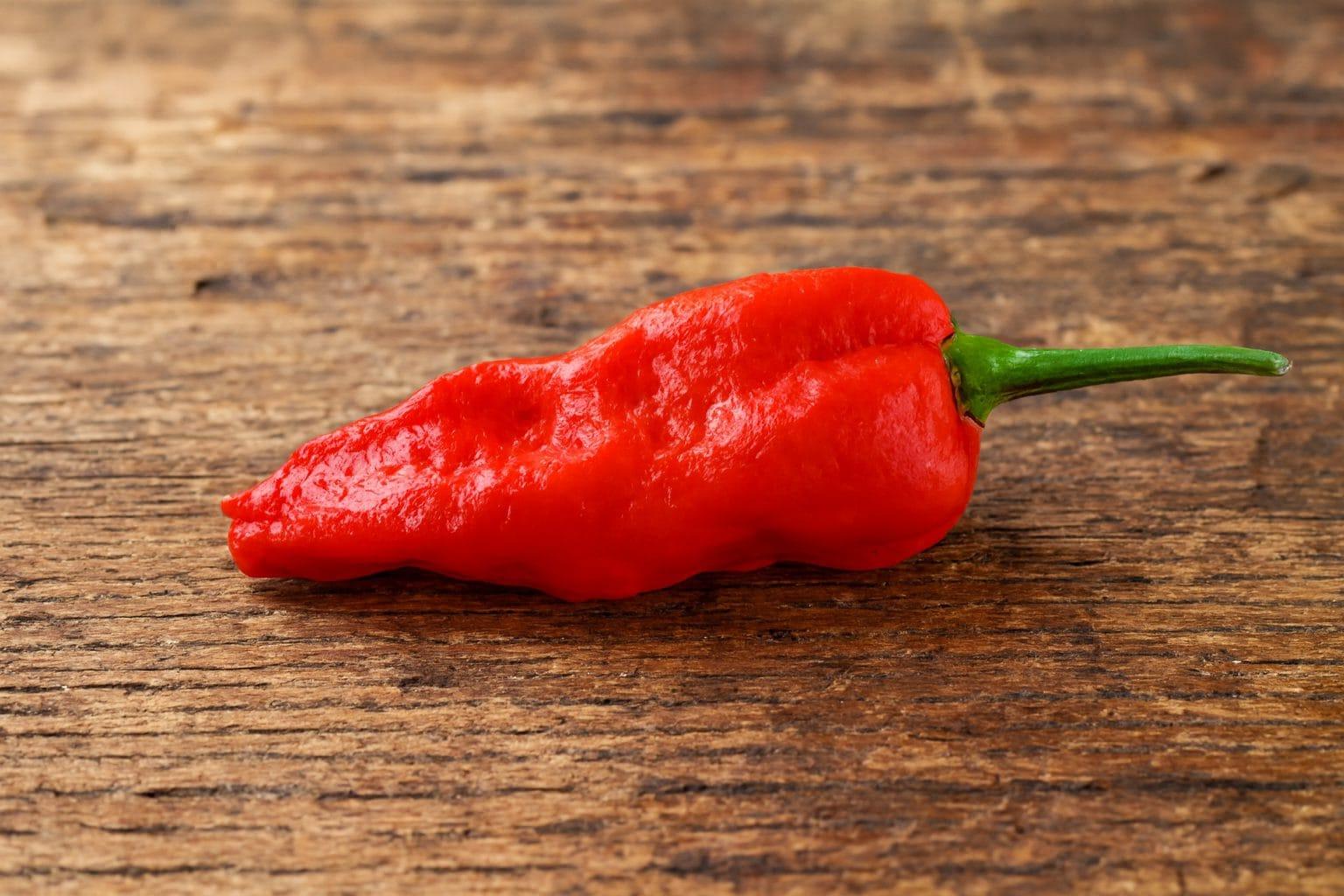
Komodo Dragon is a blisteringly hot chili cultivar belonging to the Capsicum chinense species. Developed for commercial release in the United Kingdom, this superhot variety has earned its reputation for delivering a delayed, creeping burn that rivals some of the world’s hottest peppers. With Scoville ratings reaching up to 2,200,000 SHU, Komodo Dragon is not for the faint-hearted. Its twisted, pocked pods mature to a vibrant red and carry a fruity aroma that precedes a punishing heat. Though relatively new to the chili world, it has already become a favorite among extreme heat enthusiasts, sauce makers, and growers seeking high-performance superhots with market appeal.
- Cultivar Name: Komodo Dragon
- Species: Capsicum chinense
- Common Names: Komodo Dragon Pepper
- Type: Hybrid
Origin & Lineage
Geographic Origin:
Komodo Dragon was bred in the United Kingdom by Salvatore Genovese, one of the country’s leading chili producers. His seven-acre farm in Blunham, Bedfordshire, has become a hub for superhot chili development, with Komodo Dragon emerging as one of his most successful commercial cultivars. The pepper was officially released in 2015 and made available through Tesco supermarkets, marking a rare instance of a superhot chili entering mainstream retail channels.
Cultural Significance:
While Komodo Dragon does not have traditional ritual or folkloric uses, its name and branding have contributed to its cultural impact. Named after the world’s largest lizard, the pepper evokes a sense of danger and primal intensity. Its release into UK supermarkets was a bold move that introduced superhot chilies to a broader audience, sparking media coverage and consumer curiosity. In chili-growing circles, it has become a symbol of modern breeding efforts that push the boundaries of heat while maintaining flavor integrity.
Lineage / Hybridizer History:
The exact parentage of Komodo Dragon has not been publicly disclosed, but its characteristics suggest influence from 7 Pot and Naga-type cultivars. Its delayed heat and fruity aroma are reminiscent of the 7 Pot family, while its pod shape and burn profile share traits with the Naga Morich and Bhut Jolokia. Salvatore Genovese’s breeding program has focused on developing chilies that combine extreme heat with commercial viability, and Komodo Dragon was selected for its consistent performance, striking appearance, and slow-building burn.
Heat Profile
Scoville Rating (SHU):
1,400,000–2,200,000 SHU
Perceived Heat:
Superhot to Hyperhot (500,000 or more SHU)
Heat Characteristics:
Komodo Dragon delivers a slow-building, delayed burn that intensifies over time. The initial bite reveals a fruity sweetness, but within seconds, the heat begins to bloom. This creeping sensation is often compared to the ghost pepper, though Komodo Dragon surpasses it in intensity. The burn is deep and persistent, affecting the tongue, throat, and sinuses. It is not recommended for raw consumption without dilution, and extreme caution is advised during handling and preparation.
Flavor Profile
Tasting Notes:
The flavor of Komodo Dragon is surprisingly fruity, with notes of berry, citrus, and tropical fruit. This sweetness is most noticeable before the heat sets in, allowing for a brief moment of flavor appreciation. The aroma is pungent and floral, with a hint of smokiness that becomes more pronounced when roasted.
Aftertaste / Finish:
The finish is dominated by heat, but subtle fruit notes linger beneath the burn. When dried or fermented, the flavor deepens and becomes more savory, making it suitable for complex sauces and spice blends.
Ideal Pairings:
- Fermented superhot sauces
- Fruit-based chutneys
- Vinegar-forward marinades
- Dry rubs for smoked meats
- Infused oils for grilled vegetables
Fruit Characteristics
Shape:
Slim, elongated pods with twisted, pocked surfaces; ends in a slight point
Size:
Approximately 5 cm long, 2 cm diameter
Color Stages:
Immature: green → Ripe: bright red
Wall Thickness:
Medium
Texture & Skin:
Wrinkled and blistered with random indentations; skin is firm and glossy.
Plant Details
Growth Habit:
Bushy
Plant Height & Width:
Height: 90–120 cm
Width: 60–80 cm
Foliage:
Dark green, slightly pubescent
Flower Color:
White
Days to Maturity:
100–120 days from transplant
Yield:
Moderate – typically 40–60 pods per plant under optimal conditions.
Cultivation Information
Seed Count per Pack:
5 or 10 seeds (Presoaking Chilli Seeds)
Germination Time:
10–20 days (Germinating Chilli Seeds)
Optimal Germination Temp:
25–30°C (Essential guide to ideal temperatures and humidity for chilli seed germination)
Light Requirements:
Filtered sun
Soil Preferences:
Prefers well-drained soil rich in organic matter; pH range 6.2–7.0 (Easy DIY soil mixes)
Storage Tips:
Store seeds in airtight containers in a cool, dry place. Refrigeration is recommended for long-term viability.
Notable Compounds
Capsaicinoid Content:
High concentrations of capsaicin and dihydrocapsaicin, contributing to its superhot classification
Volatile Flavor Compounds:
Limonene (citrus aroma), vanillin (sweetness), and trace geraniol (floral) have been suggested based on flavor profile comparisons
Anthocyanins / Pigments:
No purple pigmentation observed; the cultivar expresses uniform red coloration without variegation
Culinary & Cultural Use
Traditional Uses:
- Extreme hot sauces
- Spicy salsas
- Infused oils
- Dry rubs and powders
- Fermented chili pastes
Raw vs Cooked Flavor:
Raw pods deliver a crisp, fruity bite followed by a delayed and overwhelming heat. When roasted or grilled, the bitterness softens and the fruit notes deepen. Pickling is uncommon due to the pod’s thin skin and extreme heat, but fermentation enhances its complexity and aroma.
Regional Dishes:
While Komodo Dragon is not tied to any traditional regional dish, it has been used in modern fusion recipes such as:
- UK-style superhot barbecue sauces
- Ghost pepper-inspired chili oils
- Artisan spice blends featuring red superhots
- Fruit-infused hot sauces with extreme heat
Storage / Drying / Preserving Tips:
- Air-dry whole pods in a shaded, ventilated area
- Use a dehydrator at low heat to preserve volatile compounds
- Ferment chopped pods with salt for 2–4 weeks for mash-based sauces
- Store dried pods in vacuum-sealed bags to retain flavor and potency


Reviews
There are no reviews yet.