
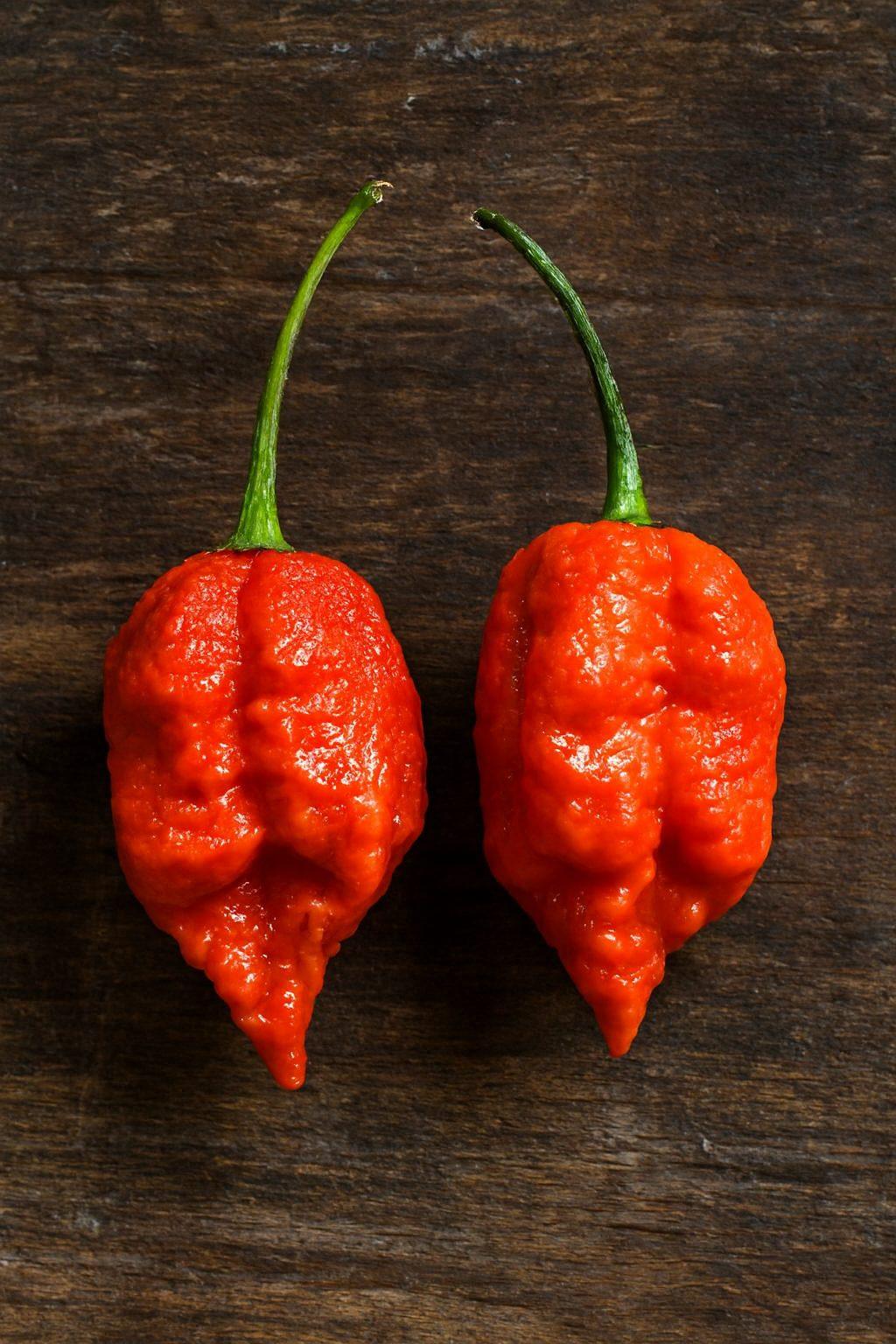
Description
Product Name: Gnarly Bhut Red
Cultivar Name: Gnarly Bhut Red
Species: Capsicum chinense × Capsicum frutescens
Common Names: Ghost Pepper, Bhut Jolokia Red
Type: Hybrid
Origin & Lineage
Geographic Origin:
Gnarly Bhut Red is a regionally significant cultivar originating from Northeast India, particularly the states of Assam, Nagaland, and Manipur. These areas are known for their rich chili heritage and have long cultivated Bhut Jolokia landraces for both culinary and agricultural use. The Gnarly Bhut Red variant was later isolated and refined by growers in South Africa and North America, where its exaggerated pod morphology and intense heat were selectively stabilized.
Cultural Significance:
In its native regions, Bhut Jolokia has been used for centuries in traditional dishes, medicinal applications, and even as a natural deterrent against wild animals. The pepper’s name—“Bhut” meaning “ghost”—reflects its haunting heat, which creeps up slowly and lingers long after consumption. Gnarly Bhut Red, as a sub-cultivar, carries forward this legacy while adding visual drama to the equation. Its deeply wrinkled pods and aggressive shape have made it a favorite among chili collectors, hot sauce artisans, and competitive growers. Though not tied to ritual use, it is often celebrated in regional festivals and culinary showcases.
Lineage / Hybridizer History:
Gnarly Bhut Red is an interspecific hybrid derived from Capsicum chinense and Capsicum frutescens. It was originally grown out separately from the traditional Bhut Jolokia lineage due to its exaggerated pod structure and slightly altered growth habit. The cultivar was popularized by specialty seed vendors, who recognized its potential as a distinct sub-type within the Ghost Pepper family. While no single breeder is credited with its creation, the variety has been stabilized over multiple generations and is now considered semi-consistent in pod shape, color, and pungency.
Heat Profile
Scoville Rating (SHU): Estimated between 900,000–1,100,000 SHU
Perceived Heat: Superhot
Heat Characteristics:
Gnarly Bhut Red delivers a slow-building, explosive heat that begins with a tingling sensation and escalates into a full-mouth burn. The intensity is concentrated in the placenta and inner walls, with capsaicinoid oils visibly pooling in ripe pods. The burn is long-lasting and can persist for 15–20 minutes, often inducing sweating, salivation, and endorphin release. Despite its ferocity, the heat is clean and does not obscure the chili’s underlying flavor, making it suitable for sauces that aim to balance fire with fruit.
Flavor Profile
Tasting Notes:
The flavor opens with a slightly sweet, fruity note reminiscent of dried apricot and citrus peel. This is followed by a nutty undertone and a sharp pepper-forward bite. When fermented, the flavor deepens, revealing earthy and umami-rich layers.
Aftertaste / Finish:
The finish is smoky and slightly bitter, with a lingering warmth that persists long after the initial burn. Roasting enhances the chili’s natural sugars, producing a caramelized depth that complements savory dishes.
Ideal Pairings:
Gnarly Bhut Red pairs well with:
- Fermented chili pastes and hot sauces
- Tomato-based stews and curries
- Grilled meats and game
- Pickled vegetables and infused oils
Fruit Characteristics
Shape: Deeply wrinkled, lobed pods with irregular tails
Size: Approximately 6–8.5 cm long, 2.5–3 cm diameter
Color Stages: Immature: green → Ripe: vibrant red
Wall Thickness: Medium
Texture & Skin: Bumpy and blistered, with a glossy finish.
Plant Details
Growth Habit: Tall and bushy
Plant Height & Width: 100–130 cm tall, 60–90 cm wide
Foliage: Dark green, slightly pubescent
Flower Color: White
Days to Maturity: 120–150 days from transplant
Yield: Moderate – typically 40–60 pods per plant under optimal conditions.
Cultivation Information
Seed Count per Pack: 5 or 10 seeds (Presoaking Chilli Seeds)
Germination Time: 10–14 days (Germinating Chilli Seeds)
Optimal Germination Temp: 25–30°C (Essential guide to ideal temperatures and humidity for chilli seed germination)
Light Requirements: Filtered sun
Soil Preferences: Well-draining soil with pH 6.0–6.8, enriched with compost and perlite (Easy DIY soil mixes)
Storage Tips: Store seeds in airtight containers in a cool, dry place. Avoid exposure to humidity and direct sunlight to preserve viability for up to 24 months.
Notable Compounds
Capsaicinoid Content:
Gnarly Bhut Red contains high levels of capsaicin and dihydrocapsaicin, contributing to its superhot classification. These compounds are most concentrated in the placenta and surrounding tissues, and are responsible for the pepper’s intense burn.
Volatile Flavor Compounds:
Though specific studies on this sub-cultivar are limited, similar Capsicum chinense varieties contain limonene, vanillin, and methyl cinnamate, which contribute to fruity and floral notes.
Anthocyanins / Pigments:
While the mature pods are red, immature pods may exhibit faint purpling under stress or high UV exposure. Anthocyanin expression is minimal but may be present in foliage under certain conditions.
Culinary & Cultural Use
Traditional Uses:
Gnarly Bhut Red is increasingly used in:
- Ají-style sauces
- Fermented chili pastes
- Salsas and chutneys
- Dry rubs and spice blends
Raw vs Cooked Flavor:
Raw pods offer a crisp texture and bright, fruity flavor with immediate heat. Cooking—especially roasting or grilling—enhances sweetness and introduces smoky undertones. Pickling preserves both color and heat, adding tangy complexity.
Regional Dishes:
This cultivar has been featured in:
- Indian-style curries and chutneys
- Caribbean pepper sauces
- South African peri-peri blends
- Mexican escabeche with tropical fruit infusions
Storage / Drying / Preserving Tips:
To preserve flavor and color:
- Air-dry pods in a shaded, ventilated area
- Use dehydrators at low heat (below 45°C)
- Store dried pods in vacuum-sealed bags
- For fermentation, combine with garlic, salt, and vinegar in sterilized jars


Reviews
There are no reviews yet.