
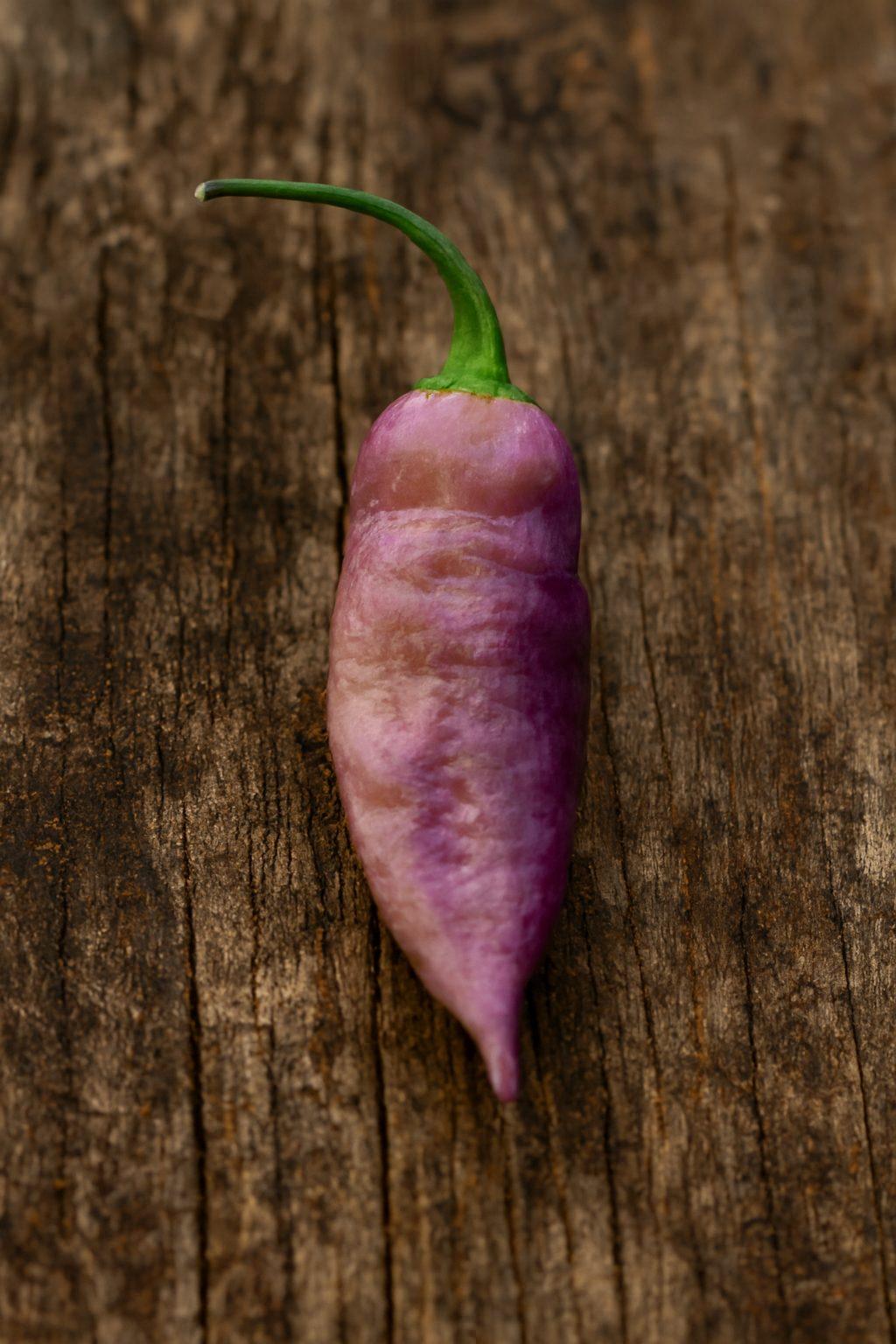
Description
Product Name: Taj Mahal Pink Peach
Taj Mahal Pink Peach is a visually arresting and intensely pungent cultivar of Capsicum chinense, developed through selective breeding to showcase a unique blend of color, flavor, and heat. Known for its thick-walled pods that transition from deep purple to peach, this variety is part of the broader Taj Mahal lineage, which includes several color variants derived from Bhut Jolokia x Pimenta da Neyde crosses. The Pink Peach variant stands out for its fruity aroma, blistered texture, and superhot classification. Though still considered genetically unstable, it has gained traction among collectors and growers for its ornamental foliage and culinary intensity.
- Cultivar Name: Taj Mahal Pink Peach
- Species: Capsicum chinense
- Common Names: Taj Mahal Peach, Pink Peach Chilli
- Type: Hybrid
Origin & Lineage
Geographic Origin: The Taj Mahal Pink Peach was originally bred in Italy by Enrico Lai, a well-known figure in the chilli breeding community. It emerged as a color variant from the Taj Mahal Orange Tiger line, itself a derivative of Bhut Jolokia and Pimenta da Neyde crosses. The cultivar has since been grown and refined across Europe, North America, and South Africa, with phenotypic variation observed depending on climate and soil conditions.
Cultural Significance: Although no ritual or folkloric use has been documented, the Taj Mahal Pink Peach has become a symbol of experimental breeding and aesthetic innovation in the chilli world. Its striking coloration and blistered texture have made it a favorite among artisan sauce makers and collectors. In culinary circles, it is appreciated for its ability to deliver intense heat alongside a complex, fruity flavor. The cultivar is often featured in boutique hot sauces and fermented blends, where its visual and sensory impact is emphasized.
Lineage / Hybridizer History: Enrico Lai, founder of Mojo Peppers, is credited with the original breeding of the Taj Mahal line. The Taj Mahal Pink Peach variant was selected from a pool of color mutations that appeared during stabilization of the Orange Tiger phenotype. While some selections were released under the Taj Mahal name, others were tagged as “Minions” and distributed informally. The Pink Peach is currently considered an F6–F7 generation hybrid, with semi-stable traits including pod shape, foliage color, and heat level. Its parentage includes Bhut Jolokia and Pimenta da Neyde, both known for their high capsaicinoid content and dark pigmentation.
Heat Profile
- Scoville Rating (SHU): 300,000–1,200,000 SHU
- Perceived Heat: Superhot
- Heat Characteristics: The heat of Taj Mahal Pink Peach is immediate and aggressive, often described as a sharp sting that evolves into a deep, lingering burn. It begins with a fiery punch and intensifies over several minutes, affecting the entire palate and throat. The heat is concentrated in the placenta and inner walls, with dried pods exhibiting even greater pungency. Despite its intensity, the burn is accompanied by a rich flavor that tempers the experience for seasoned consumers.
Flavor Profile
- Tasting Notes: Fruity, tangy, and slightly floral, with a zesty aroma reminiscent of Habanero peppers. The flesh is juicy and aromatic, offering a balance of sweetness and acidity.
- Aftertaste / Finish: The finish is long and warming, with residual citrus notes and a faint bitterness that enhances savory pairings.
- Ideal Pairings: Taj Mahal Pink Peach pairs well with tropical fruits, grilled meats, and fermented sauces. It excels in mango salsas, pineapple chutneys, and mole-style preparations. When dried, it can be used in rubs for barbecue or infused into oils for a smoky, fruity heat.
Fruit Characteristics
- Shape: Rounded to elongated, often with a pointed tip and occasional tail
- Size: 6–8 cm long, 2–3 cm diameter
- Color Stages: Immature: purple/green → Ripe: peach/pink with cream undertones
- Wall Thickness: Thick
- Texture & Skin: Rough-textured and blistered, with a glossy finish and occasional cracking near the calyx
Plant Details
- Growth Habit: Bushy
- Plant Height & Width: 90–120 cm tall, 60–80 cm wide
- Foliage: Dark green to purple, pubescent, occasionally variegated
- Flower Color: White with purple accents
- Days to Maturity: 100–120 days from germination
- Yield: Moderate – typically 30–50 pods per plant under optimal conditions
Cultivation Information
- Seed Count per Pack: 5 or 10 seeds (Presoaking Chilli Seeds)
- Germination Time: 7–14 days (Germinating Chilli Seeds)
- Optimal Germination Temp: 25–30°C (Essential guide to ideal temperatures and humidity for chilli seed germination)
- Light Requirements: Filtered sun
- Soil Preferences: Prefers well-drained, loamy soil with a pH of 6.0–6.8. Compost and perlite improve aeration and moisture retention (Easy DIY soil mixes)
- Storage Tips: Store Taj Mahal Pink Peach seeds in airtight containers in a cool, dry place. Avoid humidity and direct light to maintain viability for up to 3 years.
Notable Compounds
- Capsaicinoid Content: High concentrations of capsaicin and dihydrocapsaicin contribute to its superhot classification
- Volatile Flavor Compounds: Limonene and vanillin may be present in trace amounts, adding subtle citrus and sweet notes
- Anthocyanins / Pigments: Purple pigmentation is attributed to anthocyanin expression, inherited from Pimenta da Neyde lineage
Culinary & Cultural Use
- Traditional Uses: While not tied to heritage recipes, Taj Mahal Pink Peach has been adopted into modern hot sauce formulations and experimental dishes. It is used in fruit-based salsas, fermented pepper pastes, and infused oils.
- Raw vs Cooked Flavor: Raw Taj Mahal Pink Peach pods deliver a sharp, fruity bite with immediate heat. Cooking enhances the sweetness and reduces bitterness. Roasting deepens the flavor, while pickling preserves the pigmentation and adds tang.
- Regional Dishes: Featured in artisan hot sauces and fusion dishes such as peach-habanero chutney, smoked chilli oil, and fermented mango salsa.
- Storage / Drying / Preserving Tips: Dry pods in a shaded, ventilated area to retain pigmentation. Once dried, they may be ground into powder or stored whole. Fermentation with garlic and vinegar yields a complex, shelf-stable condiment.



Reviews
There are no reviews yet.