
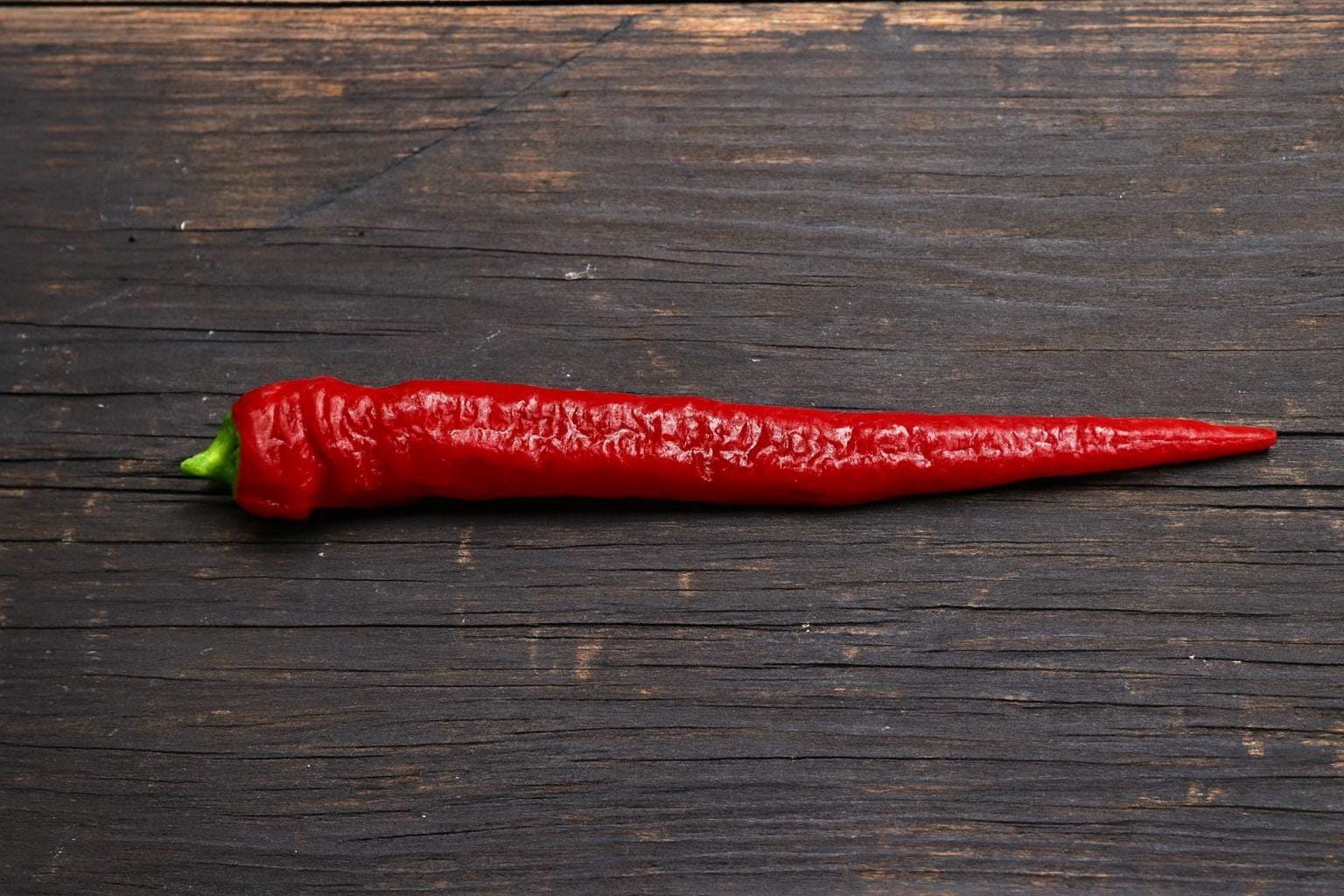
Description
Product Name: Jimmy Nardello
Jimmy Nardello is a celebrated heirloom pepper cultivar renowned for its exceptional sweetness, thin skin, and culinary versatility. Though it resembles a hot chili in shape, it is entirely heatless, making it a favorite among chefs and gardeners alike. This variety has been preserved through generations and continues to thrive due to its rich flavor, ease of cultivation, and historical significance.
- Cultivar Name: Jimmy Nardello
- Species: Capsicum annuum
- Common Names: Jimmy Nardello’s Sweet Italian Frying Pepper
- Type: Heirloom
Origin & Lineage
Geographic Origin: Jimmy Nardello originated in the Basilicata region of Southern Italy. In the late 1800s, Giuseppe and Angella Nardiello cultivated this pepper in their home garden before emigrating to the United States. Upon settling in Naugatuck, Connecticut, they continued growing the variety, which was eventually named after their fourth son, Jimmy.
Cultural Significance: This cultivar holds deep cultural value as a symbol of Italian-American heritage. Traditionally, it was used in home cooking, especially for frying, due to its sweet flavor and tender skin. Although no ritual or folklore is directly associated with it, the pepper has become emblematic of heirloom preservation and culinary authenticity. Its revival from near extinction was driven by seed-saving initiatives and heirloom advocacy groups, further cementing its cultural relevance.
Lineage / Hybridizer History: Jimmy Nardello is an open-pollinated heirloom, not a hybrid. It was preserved by the Nardiello family for over a century and later popularized through the Seed Savers Exchange. Its lineage is purely traditional, with no known hybrid parentage. The cultivar’s survival and dissemination were largely due to Jimmy Nardello himself, who maintained the seeds and shared them with fellow growers.
Heat Profile
Scoville Rating (SHU): 0 SHU
Perceived Heat: Sweet (0 to 50 SHU)
Heat Characteristics: Jimmy Nardello is completely heatless. Despite its elongated, chili-like appearance, it contains no capsaicinoids responsible for pungency. This makes it ideal for those seeking the flavor of peppers without the burn. When dried or roasted, it develops a mild smokiness, but no heat is perceived.
Flavor Profile
Tasting Notes: The flavor is intensely sweet, often described as candy-like. It surpasses the sweetness of red bell peppers and carries subtle fruity undertones. When eaten raw, the flesh is crisp and juicy, offering a refreshing bite.
Aftertaste / Finish: A clean, lingering sweetness remains after consumption. When cooked, especially fried or roasted, the flavor deepens and becomes slightly smoky with a buttery finish.
Ideal Pairings:
- Sautéed with garlic and olive oil
- Roasted and served with meats or cheeses
- Pickled for antipasto platters
- Blended into sweet pepper sauces
- Added raw to salads for color and crunch
Fruit Characteristics
Shape: Conical, tapered pods with a blunt or pointed tip; often slightly curved or twisted
Size: 12–25 cm long, 1–3 cm diameter
Color Stages: Immature: green → Ripe: bright red
Wall Thickness: Thin
Texture & Skin: Smooth, taut, and glossy; slightly wrinkled when mature.
Plant Details
Growth Habit: Bushy
Plant Height & Width:Height: 50–60 cm, Width: 30–40 cm
Foliage: Dark green, non-variegated; leaves are smooth and slightly pubescent
Flower Color: White
Days to Maturity: Approximately 80–90 days from germination to harvest
Yield: High – plants can produce dozens of pods per season under optimal conditions.
Cultivation Information
Seed Count per Pack: 5 or 10 seeds (Presoaking Chilli Seeds)
Germination Time: 10–20 days (Germinating Chilli Seeds)
Optimal Germination Temp: 25–30°C (Essential guide to ideal temperatures and humidity for chilli seed germination)
Light Requirements: Filtered sun
Soil Preferences: Prefers well-drained soil with pH between 6.2–7.0. Enriched with organic matter such as compost or aged manure (Easy DIY soil mixes)
Storage Tips: Store seeds in airtight containers in a cool, dry place. Avoid exposure to light and humidity to maintain viability.
Notable Compounds
Capsaicinoid Content: None – Jimmy Nardello is a non-pungent cultivar
Volatile Flavor Compounds: Trace amounts of vanillin and fruity esters may contribute to its sweet aroma when roasted
Anthocyanins / Pigments: No purple pigmentation; the bright red coloration is due to carotenoids such as capsanthin and capsorubin.
Culinary & Cultural Use
Traditional Uses: Primarily used for frying in Italian-American cuisine. Often sautéed with onions and garlic or served alongside meats. It is also used in sweet pepper relishes and antipasto dishes.
Raw vs Cooked Flavor: Raw peppers are crisp and sweet. Cooking enhances their flavor, making them tender and smoky. Frying in olive oil is the most traditional preparation, yielding a buttery texture and rich taste.
Regional Dishes:
- Italian-style fried peppers
- Connecticut garden stir-fries
- Sweet pepper antipasto
- Roasted pepper crostini
Storage / Drying / Preserving Tips:
Jimmy Nardello peppers can be dried whole or sliced. Drying intensifies their sweetness and adds a smoky note. For preservation, they may be pickled in vinegar brine or frozen after roasting. When fermenting, use a 2–3% salt brine and store in sterilized jars. Refrigeration post-fermentation is recommended to retain flavor and prevent spoilage.


Reviews
There are no reviews yet.