
Description
Product Name: Naga Viper Purple Chilli Seeds
Cultivar Name: Naga Viper Purple
Species: Capsicum chinense
Common Names: Purple Viper, Purple Naga Viper
Type: Hybrid
Origin & Lineage
Geographic Origin: The Naga Viper Purple pepper was developed in the United Kingdom by renowned breeder Gerald Fowler of the Chilli Pepper Company in Cumbria. This cultivar is a rare phenotypic variant of the original Naga Viper, which itself is a three-way hybrid of Bhut Jolokia (Ghost Pepper), Trinidad Scorpion, and Naga Morich. The purple phenotype was stabilized through selective breeding, incorporating a purple variant of Bhut Jolokia to enhance pigmentation. Though its origins are rooted in the UK, the cultivar has since been propagated globally by specialty growers and seed collectors, particularly in Europe and South Africa.
Cultural Significance: While the Naga Viper Purple does not have documented ritual or folkloric use, it has gained cultural traction among superhot chili enthusiasts and collectors. Its dramatic coloration and extreme heat have made it a staple in competitive growing circles and hot sauce production. In modern culinary contexts, it is used sparingly in ultra-hot sauces, infused oils, and fermented condiments. The cultivar’s visual appeal also lends itself to ornamental gardening, where its purple foliage and pods serve as a striking centerpiece.
Lineage / Hybridizer History: The original Naga Viper was created by Gerald Fowler in 2010 and briefly held the Guinness World Record for the world’s hottest chili in 2011. The Purple variant was later developed by crossing:
- Naga Morich – known for its intense heat and wrinkled pods
- Bhut Jolokia Purple – contributing pigmentation and floral aroma
- Trinidad Scorpion – adding tail morphology and pungency
The Purple Naga Viper remains genetically unstable, often found in F3 to F5 generations. As a result, phenotypic variation in pod shape, color, and heat intensity may occur. Nonetheless, the cultivar has been embraced for its consistent superhot performance and ornamental value.
Heat Profile
Scoville Rating (SHU): 1,200,000–1,382,118 SHU
Perceived Heat: Superhot (500,000 or more SHU)
Heat Characteristics: The burn delivered by Naga Viper Purple is aggressive and lingering. It begins with a slow build, characteristic of Bhut Jolokia, and intensifies over several minutes. The heat is concentrated in the placenta and inner walls, often described as a “creeping inferno.” Despite its intensity, the burn is clean and does not overwhelm the pepper’s underlying flavor. Gloves and eye protection are strongly recommended during handling, as capsaicinoid oils can cause severe irritation.
Flavor Profile
Tasting Notes: The flavor is complex and layered, offering a fruity sweetness with floral and smoky undertones. Initial notes include citrus zest and tropical fruit, followed by a subtle earthiness. The flavor is most pronounced when the pods are fresh and minimally processed.
Aftertaste / Finish: The finish is dry and slightly bitter, with lingering floral notes. Roasting enhances the pepper’s sweetness and introduces caramelized depth, while fermentation adds umami and tang.
Ideal Pairings:
- Extreme hot sauces with mango, tamarind, or pineapple
- Fermented chili pastes and rubs
- Pickled condiments with garlic and vinegar
- Infused oils for grilled meats and vegetables
- Spicy chutneys and relishes
Fruit Characteristics
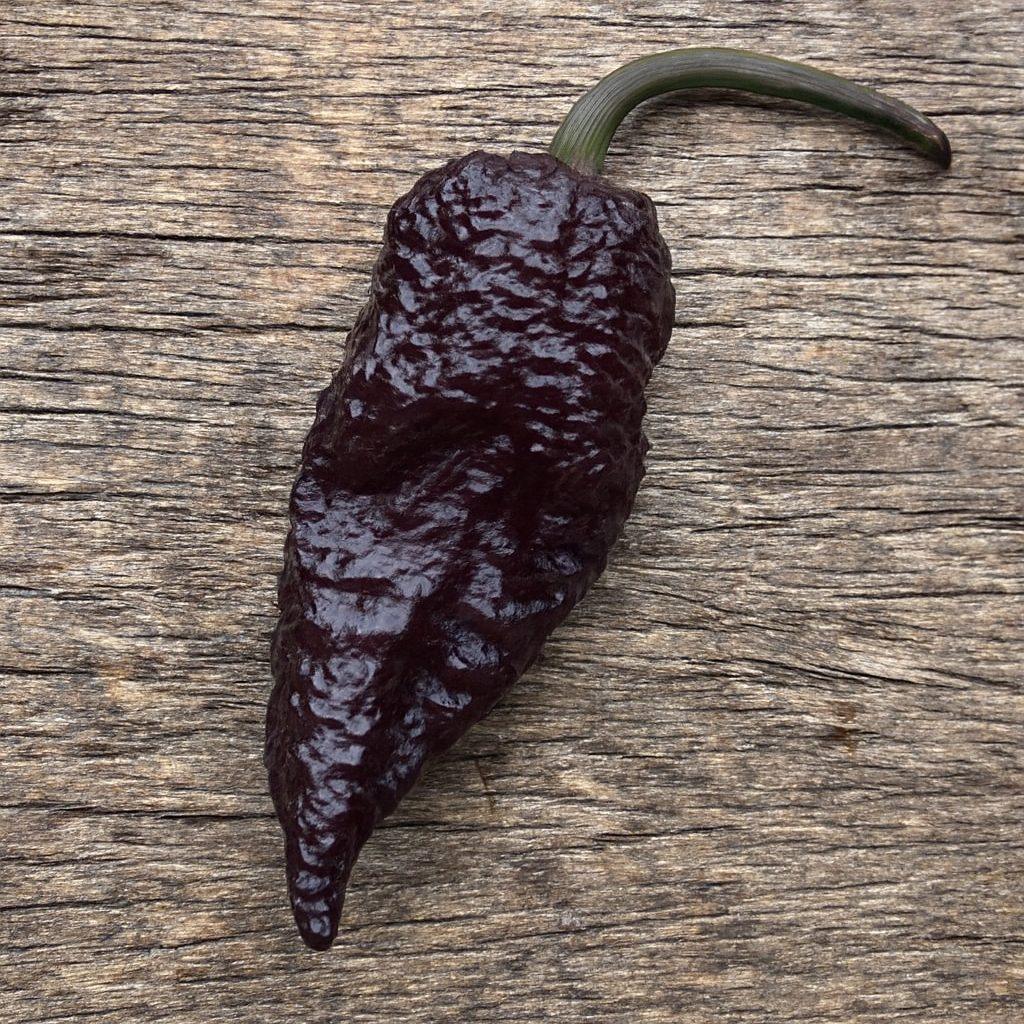
Shape: Elongated, slightly curved, often with a scorpion-like tail
Size: 5–6 cm long, 2–2.5 cm diameter
Color Stages: Immature: green → Ripe: deep purple → Final: red with purple overlay
Wall Thickness: Thin
Texture & Skin: Wrinkled and blistered; matte finish with occasional gloss
Plant Details
Growth Habit: Bushy
Plant Height & Width: 80–100 cm tall × 60–80 cm wide
Foliage: Dark green with purple veining; pubescent
Flower Color: Purple with pink accents
Days to Maturity: 100–120 days from transplant
Yield: Moderate – 40 to 60 pods per plant under optimal conditions.
Cultivation Information
Seed Count per Pack: 5 or 10 seeds (Presoaking Chilli Seeds)
Germination Time: 10–20 days (Germinating Chilli Seeds)
Optimal Germination Temp: 25–30°C (Essential guide to ideal temperatures and humidity for chilli seed germination)
Light Requirements: Filtered sun
Soil Preferences:
- pH: 6.2–7.0
- Well-drained loamy soil enriched with compost
- Mulching recommended for moisture retention(Easy DIY soil mixes)
Storage Tips:
Store seeds in airtight containers at 4–8°C. Avoid exposure to humidity and light. Silica gel packets may be used to extend viability.
Notable Compounds
Capsaicinoid Content:
- Capsaicin
- Dihydrocapsaicin
These compounds are responsible for the pepper’s extreme pungency and metabolic effects. In Naga Viper Purple, capsaicinoid concentration is among the highest recorded in non-commercial cultivars.
Volatile Flavor Compounds:
- Limonene (citrus brightness)
- Geraniol (floral aroma)
- Hexanal (green freshness)
These compounds contribute to the pepper’s aromatic complexity, especially when used in fresh or fermented preparations.
Anthocyanins / Pigments: The deep purple coloration in immature pods and foliage is due to anthocyanin accumulation. This pigmentation is most pronounced under high UV exposure and cooler temperatures. Genetic expression varies across generations, but purple traits remain dominant in stabilized lines.
Culinary & Cultural Use
Traditional Uses: Although not tied to historical culinary traditions, Naga Viper Purple has been embraced in modern hot sauce production, extreme heat challenges, and artisanal chili fermentations. Its unique flavor and appearance make it a standout ingredient in specialty products.
Raw vs Cooked Flavor: Raw pods deliver crisp texture and intense heat. Cooking—especially roasting or grilling—enhances sweetness and reduces sharpness. Pickling softens the texture and adds tang, while fermentation deepens the flavor and introduces umami notes.
Regional Dishes: While no traditional dishes are specifically associated with Naga Viper Purple, it has been successfully incorporated into:
- Caribbean-style pepper sauces
- Indian-style curry pastes
- Mexican-style salsa roja
- South African peri-peri marinades
- Korean gochujang-style ferments
Storage / Drying / Preserving Tips:
- Dry pods whole in a dehydrator at 45°C for 24–36 hours
- Slice pods to accelerate drying
- Store in vacuum-sealed bags or airtight jars
- Ferment chopped pods with 2% salt brine for 2–4 weeks
- Freeze whole pods in airtight containers for up to 12 months


Reviews
There are no reviews yet.