
Description
Fluorescent Purple Chilli
Product Name: Fluorescent Purple
Cultivar Name: Fluorescent Purple
Species: Capsicum annuum
Common Names: None
Type: Hybrid Ornamental
Origin & Lineage
Geographic Origin:
The Fluorescent Purple chilli is believed to have originated as a semi-stable ornamental variety within the Capsicum annuum species, most likely developed through selective breeding in North America. While its exact point of origin remains undocumented, it has been cultivated and distributed by specialty growers in the United States and South Africa. Its classification within the Picante Class and ornamental category suggests it was bred primarily for aesthetic appeal, though its culinary versatility has since been recognized.
Cultural Significance:
Although not tied to any specific folklore or ritual use, the Fluorescent Purple chilli has gained cultural traction among ornamental gardeners and culinary enthusiasts who value its vivid coloration and compact growth habit. In urban gardens and container arrangements, it is often used as a visual focal point. Its striking purple foliage and flowers evoke themes of abundance and transformation, and its dual-purpose nature—both decorative and edible—has made it a popular choice in boutique horticulture and artisanal food circles.
Lineage / Hybridizer History:
The Fluorescent Purple chilli is a semi-stable hybrid, though its exact parentage has not been formally published. It is speculated to be a descendant of other purple ornamental annuum cultivars such as Purple Tiger or Buena Mulata, bred for enhanced pigmentation and compact growth. The variety has been stabilized over several generations by independent growers, including Renegade Acres in Michigan and Tony Lague in South Africa, who have contributed to its propagation and refinement. It remains semi-stable, meaning some variation in pod shape and color may occur across generations, especially under differing environmental conditions.
Heat Profile
Scoville Rating (SHU):
25,000–50,000 SHU
Perceived Heat:
Hot (15,000 to 50,000 SHU)
Heat Characteristics:
Despite its ornamental classification, the Fluorescent Purple chilli delivers a surprisingly assertive heat. The burn is sharp and immediate, concentrated primarily on the tongue and lips. It does not linger excessively, making it suitable for quick-heat applications. The heat level may vary slightly depending on ripeness and growing conditions, with immature purple pods tending to be slightly milder than fully ripe red ones. This cultivar’s heat has been described as clean and direct, without the bitterness sometimes found in other annuum varieties.
Flavor Profile
Tasting Notes:
The flavor of Fluorescent Purple is crisp and vegetal, with subtle notes of citrus and green bell pepper. While not as complex as chinense cultivars, it offers a refreshing brightness that complements its heat. The flavor is most pronounced when the pods are freshly harvested and used raw.
Aftertaste / Finish:
The finish is clean and slightly grassy, with a faint sweetness emerging as the heat subsides. When dried, the flavor intensifies and develops a smoky undertone, making it suitable for spice blends and rubs.
Ideal Pairings:
- Fresh salsas with tomato and onion
- Stir-fries with garlic and soy
- Pickled pepper medleys
- Infused vinegars and oils
- Garnishes for tacos, salads, and grain bowls
Fruit Characteristics
Shape:
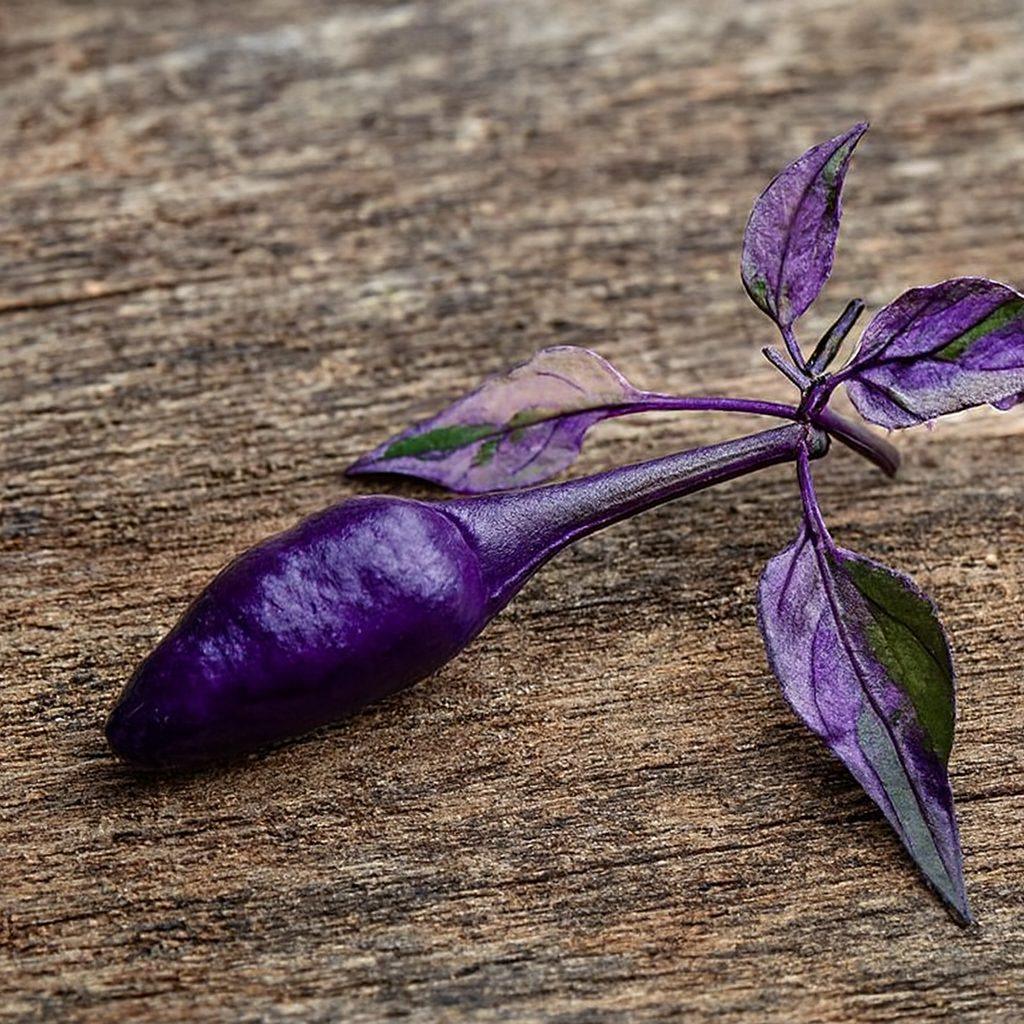
Tapered, slightly elongated oval
Size:
2–3 cm long, 1–1.5 cm diameter
Color Stages:
Immature: dark purple-black → Ripe: vibrant red
Wall Thickness:
Thin
Texture & Skin:
Smooth with occasional puckering near the tip
Plant Details
Growth Habit:
Compact
Plant Height & Width:
Height: 30–45 cm
Width: 25–35 cm
Foliage:
Variegated with dark purple and green tones; slightly pubescent
Flower Color:
Purple with white accents
Days to Maturity:
80–90 days from transplant
Yield:
Moderate – typically 40–60 pods per plant
Cultivation Information
Seed Count per Pack:
5 or 10 seeds (Presoaking Chilli Seeds)
Germination Time:
7–14 days (Germinating Chilli Seeds)
Optimal Germination Temp:
25–30°C (Essential guide to ideal temperatures and humidity for chilli seed germination)
Light Requirements:
Filtered sun
Soil Preferences:
- pH: 6.0–6.8
- Well-draining loam or sandy soil
- Rich in organic matter (Easy DIY soil mixes)
Storage Tips:
Store seeds in airtight containers in a cool, dry place. Avoid exposure to moisture and direct sunlight. Refrigeration is recommended for long-term viability, though freezing is discouraged.
Notable Compounds
Capsaicinoid Content:
Primarily capsaicin and dihydrocapsaicin, consistent with hot annuum varieties
Volatile Flavor Compounds:
Trace amounts of limonene and green esters contribute to its fresh aroma; vanillin presence is unconfirmed
Anthocyanins / Pigments:
High anthocyanin concentration responsible for deep purple coloration in foliage and immature pods; pigmentation fades as carotenoids develop during ripening
Culinary & Cultural Use
Traditional Uses:
While not rooted in traditional cuisine, Fluorescent Purple has been adopted in:
- Small-batch salsas
- Pickled pepper assortments
- Decorative garnishes
- Infused oils and vinegars
Raw vs Cooked Flavor:
Raw pods deliver a crisp bite with immediate heat and subtle citrus notes. When roasted or grilled, the sweetness becomes more pronounced and the heat softens. Pickling preserves the color and texture, while drying intensifies the flavor and heat.
Regional Dishes:
Though not featured in named regional dishes, Fluorescent Purple has been used in:
- Salsa roja variants
- Escabeche-style pickles
- Garnishes for tamales and tostadas
- Artisan hot sauces and spice blends
Storage / Drying / Preserving Tips:
- Air-drying is effective due to thin walls
- Oven drying at low temperatures (below 50°C) retains volatile compounds
- Pickling in vinegar with garlic and herbs enhances both flavor and shelf life
- Fermentation with salt brine adds complexity and depth
- Freezing is suitable for short-term use but may compromise texture



Reviews
There are no reviews yet.