
Description
Filius Blue
Product Name: Filius Blue
Cultivar Name: Filius Blue
Species: Capsicum annuum
Common Names: Sweet pepper ‘Filius Blue’
Type: Heirloom Ornamental
Origin & Lineage
Geographic Origin:
Filius Blue is a striking heirloom cultivar originating from Mexico. It belongs to the Capsicum annuum species, which encompasses many of the world’s most widely cultivated peppers. The cultivar’s name, “Filius,” is Latin for “son,” though its etymological connection to the region remains speculative. It is most commonly grown in temperate zones and has gained popularity in Europe and North America for its ornamental appeal.
Cultural Significance:
Although Filius Blue is primarily cultivated for its aesthetic value, it has found limited use in culinary applications. In Mexican gardens, ornamental peppers like Filius Blue are often grown alongside herbs and vegetables, contributing to the visual richness of traditional kitchen gardens. While no specific ritual or folkloric use has been documented, its vivid coloration and compact form have made it a favorite in urban and container gardening, often symbolizing abundance and vibrancy.
Lineage / Hybridizer History:
Filius Blue is an open-pollinated heirloom variety with no known hybrid parentage. It has not been attributed to a specific breeder but has been preserved through generations of seed saving. The cultivar was awarded the Royal Horticultural Society’s Award of Garden Merit in 2006, confirming its horticultural value and stability. It is not a hybrid and does not result from deliberate crossbreeding, making it suitable for seed saving and propagation.
Heat Profile
Scoville Rating (SHU):
30,000–50,000 SHU
Perceived Heat:
Hot
Heat Characteristics:
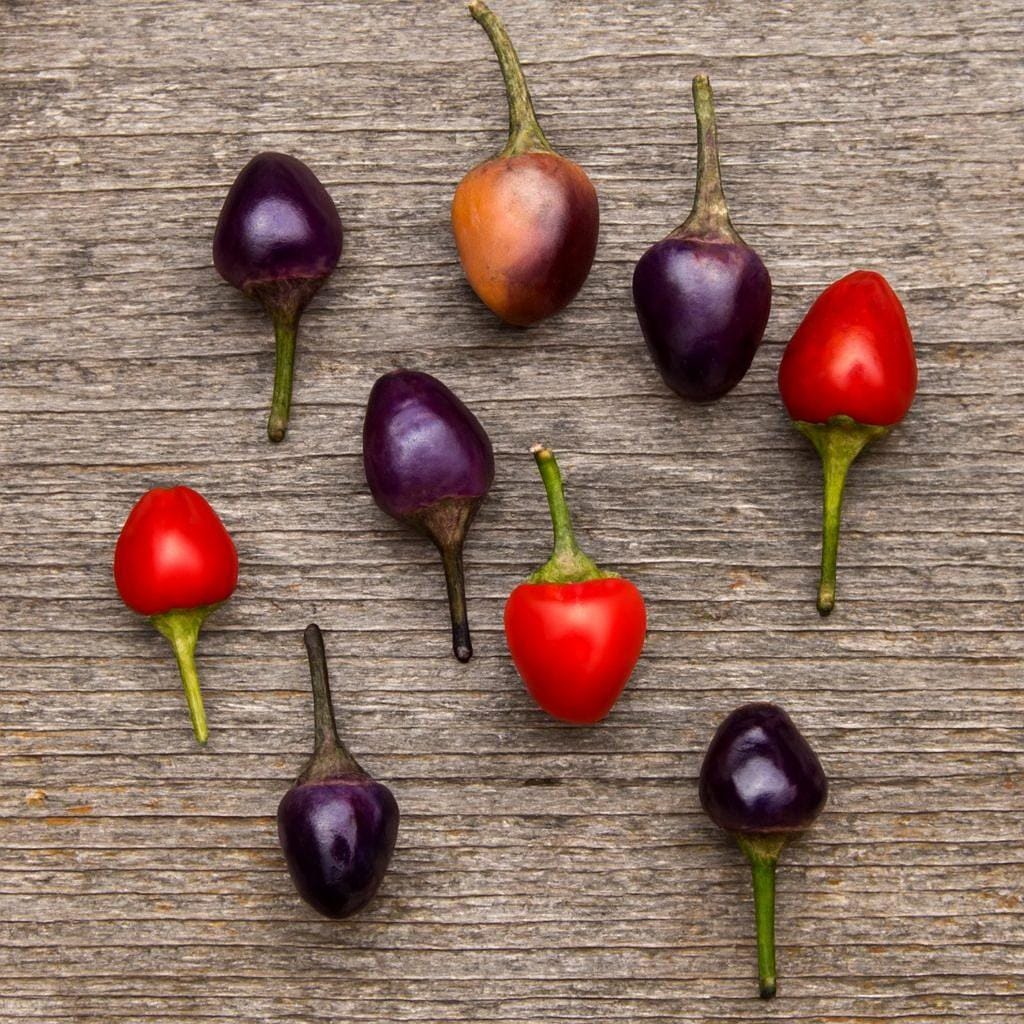
Filius Blue peppers exhibit a unique heat trajectory. Unlike most Capsicum annuum varieties, which intensify in heat as they ripen, Filius Blue peppers are hottest when immature—during their deep indigo-blue stage. As they mature to red, their heat diminishes noticeably. This reversal of the typical capsaicin accumulation pattern has been confirmed by multiple growers and taste testers. The initial bite is sharp and immediate, with a fast fade, making it suitable for quick-heat applications in sauces and salsas.
Flavor Profile
Tasting Notes:
The flavor of Filius Blue is described as neutral to mildly peppery, with subtle vegetal undertones. It lacks the complexity of fruitier baccatum or chinense varieties but compensates with a clean, crisp bite. When immature, the flavor is sharper and more pungent; as the pods ripen, they develop a faint sweetness.
Aftertaste / Finish:
The finish is short and clean, with minimal lingering heat. Mature red pods offer a slightly sweet aftertaste, while the blue stage delivers a more assertive peppery finish.
Ideal Pairings:
- Fresh salsas with tomato and onion
- Pickled pepper medleys
- Stir-fries with garlic and soy
- Garnishes for tacos and enchiladas
- Infused oils and vinegars
Fruit Characteristics
Shape:
Conical, slightly ovoid
Size:
2–2.5 cm long, 1–1.5 cm diameter
Color Stages:
Immature: deep indigo-blue → Ripe: orange → red
Wall Thickness:
Thin
Texture & Skin:
Smooth with slight puckering at the tip
Plant Details
Growth Habit:
Compact
Plant Height & Width:
Height: 30–60 cm
Width: 25–40 cm
Foliage:
Dark green with purple shading; slightly pubescent
Flower Color:
White with purple accents
Days to Maturity:
80–90 days from transplant
Yield:
Moderate – typically 40–60 pods per plant
Cultivation Information
Seed Count per Pack:
5 or 10 seeds (Presoaking Chilli Seeds)
Germination Time:
7–14 days (Germinating Chilli Seeds)
Optimal Germination Temp:
25–30°C (Essential guide to ideal temperatures and humidity for chilli seed germination)
Light Requirements:
Filtered sun
Soil Preferences:
- pH: 6.0–6.8
- Well-draining loam or sandy soil
- Rich in organic matter (Easy DIY soil mixes)
Storage Tips:
Store seeds in airtight containers in a cool, dark, and dry location. Avoid exposure to direct sunlight or moisture. Refrigeration is recommended for long-term viability, but freezing should be avoided.
Notable Compounds
Capsaicinoid Content:
Primarily capsaicin and dihydrocapsaicin, with peak concentration in immature blue pods
Volatile Flavor Compounds:
No dominant volatile compounds documented; minor traces of vegetal esters may be present
Anthocyanins / Pigments:
High anthocyanin concentration responsible for deep indigo-blue coloration in immature pods; pigmentation fades as carotenoids develop during ripening
Culinary & Cultural Use
Traditional Uses:
While not a staple in traditional Mexican cuisine, Filius Blue has been used in:
- Small-batch salsas
- Pickled pepper assortments
- Decorative garnishes
Raw vs Cooked Flavor:
Raw Filius Blue peppers deliver a sharp, immediate heat with minimal flavor complexity. When roasted or grilled, the heat softens and the sweetness becomes more pronounced. Pickling enhances their visual appeal and preserves their texture.
Regional Dishes:
Though not widely featured in named regional dishes, Filius Blue has been incorporated into:
- Salsa roja variants
- Escabeche-style pickles
- Garnishes for tamales and tostadas
Storage / Drying / Preserving Tips:
- Air-drying is effective due to thin walls
- Oven drying at low temperatures (below 50°C) preserves color
- Pickling in vinegar with garlic and herbs enhances both flavor and shelf life
- Freezing is suitable for short-term storage but may compromise texture


Reviews
There are no reviews yet.