
Description
Product Name: MOA Scotch Bonnet Yellow
Cultivar Name: MOA Scotch Bonnet Yellow
Species: Capsicum chinense
Common Names: Yellow Scotch Bonnet, Jamaican Yellow Bonnet, MOA Bonnet
Type: Regionally Certified Heirloom
Origin & Lineage
Geographic Origin:
MOA Scotch Bonnet Yellow is a regionally certified heirloom cultivar originating from Jamaica. The acronym “MOA” stands for the Ministry of Agriculture of Trinidad, which formally recognized this variety as the true commercial standard for Scotch Bonnet peppers. Bred for export quality and virus resistance, this cultivar is widely grown across the Caribbean and has gained international acclaim for its consistent shape, vibrant color, and signature flavor.
Cultural Significance:
MOA Scotch Bonnet Yellow is a cornerstone of Caribbean cuisine, particularly in Jamaica, where it is used in jerk seasoning, pepper sauces, and seafood dishes. Its squat, bonnet-like shape and golden hue are iconic in regional markets. The cultivar is also prized by diaspora communities and hot sauce producers for its balance of heat and fruitiness. It is considered a legacy pepper, with strict grading standards for export and local consumption.
Lineage / Hybridizer History
Parentage:
Selected from traditional Scotch Bonnet landraces and stabilized under the oversight of Jamaica’s Ministry of Agriculture
Breeders selected for:
• True bonnet shape with 3–4 lobes
• Uniform golden-yellow coloration at maturity
• Fruity, floral aroma with intense heat
• Resistance to Gemini and Poty viruses
• High yield and export-grade consistency
Stabilization Status:
Fully stabilized heirloom cultivar. Recognized by the Jamaican government as the commercial standard for Scotch Bonnet peppers. Open-pollinated and true to type.
Heat Profile
Scoville Rating (SHU): 150,000–325,000 SHU
Perceived Heat: Very hot
Heat Characteristics:
MOA Scotch Bonnet Yellow delivers a sharp, immediate burn that intensifies over 30–60 seconds. The heat is concentrated in the placenta and seed tissue, with a lingering warmth that complements its fruity top notes. It is hotter than most habaneros but smoother in delivery.
Flavor Profile
Tasting Notes:
Bright, fruity, and floral with notes of mango, pineapple, and citrus zest. Undertones of tomato and green apple emerge in raw form, while cooking deepens the sweetness and adds a smoky edge.
Aftertaste / Finish:
Clean, tropical finish with a slow fade of heat and residual sweetness
Ideal Pairings:
• Jerk chicken, pork, and seafood marinades
• Caribbean pepper sauces and chutneys
• Pickled vegetable relishes (e.g., Haitian pikliz)
• Tropical salsas with mango or papaya
• Roasted root vegetables and grilled meats
• Infused oils and vinegars
Fruit Characteristics
Shape:
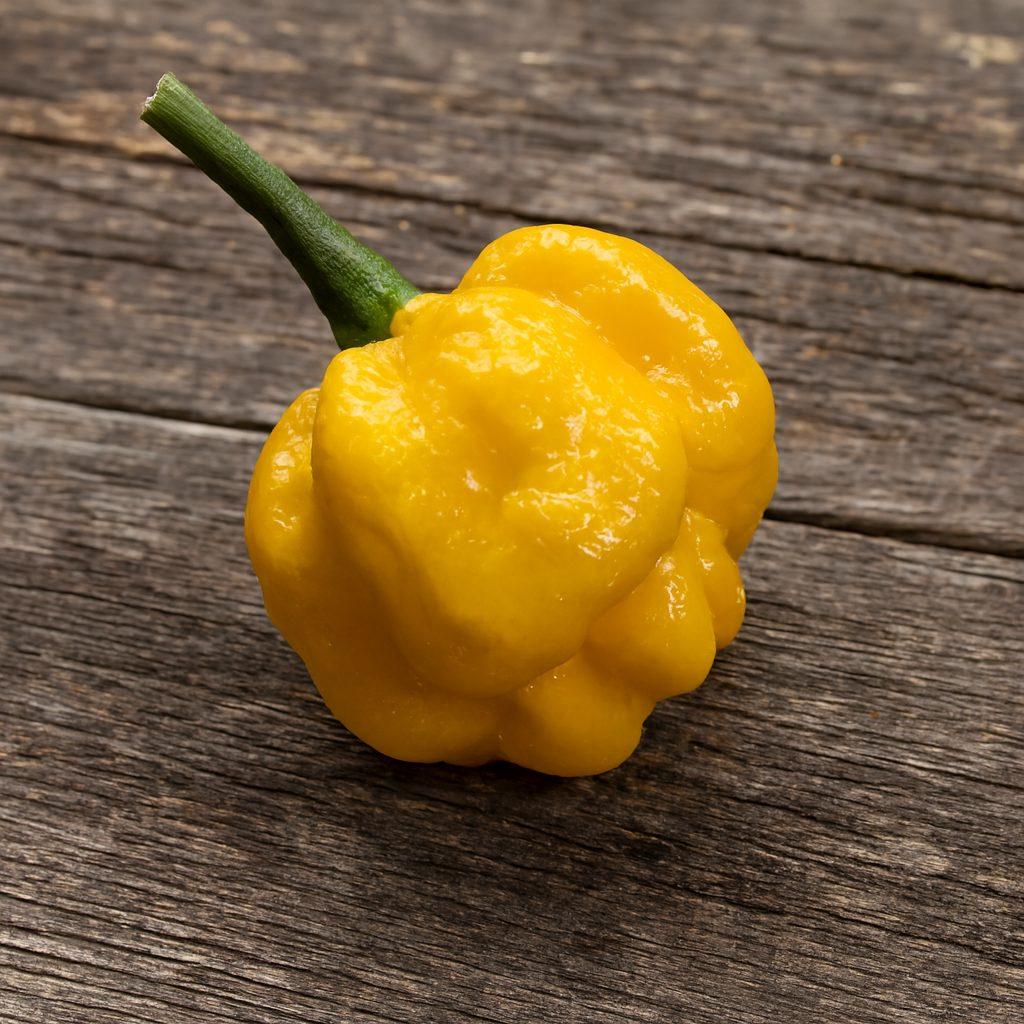
Squat, bonnet-shaped pods with distinct lobes and a blunt apex
Size:
5–6 cm wide, 3–4 cm tall
Color Stages:
• Immature: Dark green
• Mid-stage: Lime green to yellow-orange
• Ripe: Bright golden yellow
• Overripe: May deepen to mustard or amber
Wall Thickness:
Medium
Texture & Skin:
Glossy, smooth skin with slight wrinkling. Flesh is firm and juicy.
Plant Details
Growth Habit:
Compact and bushy
Plant Height & Width:
Height: 60–90 cm
Width: 45–60 cm
Foliage:
Dark green, ovate leaves with dense canopy
Flower Color:
White
Days to Maturity:
90–130 days from transplant
Yield:
High — typically 15–25 pods per plant under optimal conditions
MOA Scotch Bonnet Yellow plants are vigorous and well-suited to tropical and subtropical climates. They benefit from staking and pruning to manage canopy density and fruit load.
Cultivation Information
Seed Count per Pack: 10 seeds
Germination Time: 7–14 days (Germinating Chilli Seeds)
Optimal Germination Temp: 26–32°C (Essential guide to ideal temperatures and humidity for chilli seed germination)
Light Requirements: Filtered sun
Soil Preferences:
• pH: 6.0–6.8
• Rich, well-draining loam (Easy DIY soil mixes)
• Benefits from compost and calcium-rich feeding
Watering:
Maintain consistent moisture. Avoid waterlogging. Mulch to retain soil moisture and suppress weeds.
Fertilization:
Apply balanced NPK fertilizer every 3–4 weeks. Supplement with calcium and magnesium to prevent blossom end rot.
Pruning:
Remove lower leaves and non-productive branches to improve airflow and light penetration.
Storage Tips:
Store seeds in a cool, dry place. Refrigeration at 4–8°C extends viability. Avoid humidity and direct light.
Notable Compounds
Capsaicinoid Content:
High — primarily capsaicin and dihydrocapsaicin
Volatile Flavor Compounds:
Methyl anthranilate, limonene, and esters contribute to fruity aroma
Pigments:
Yellow coloration driven by capsanthin, lutein, and beta-carotene
Nutritional Value:
Rich in vitamin C, carotenoids, and antioxidants. Contains dietary fiber and trace minerals.
Culinary & Cultural Use
Traditional Uses:
MOA Scotch Bonnet Yellow is central to Jamaican jerk seasoning, pepper mash production, and Caribbean hot sauces. It is also used in pickled relishes, chutneys, and tropical salsas.
Raw vs Cooked Flavor:
Raw: Bright, fruity, and intensely hot
Cooked: Sweet, smoky, and mellowed with depth
Regional Dishes:
• Jamaican jerk chicken and pork
• Trinidadian pepper sauce
• Haitian pikliz (spicy pickled vegetables)
• Caribbean seafood stews
• West African pepper soups
Storage / Drying / Preserving Tips:
• Can be frozen whole or chopped
• Suitable for drying into flakes or powder
• Excellent for fermentation and mash production
• Can be preserved in vinegar or oil infusions


Reviews
There are no reviews yet.