
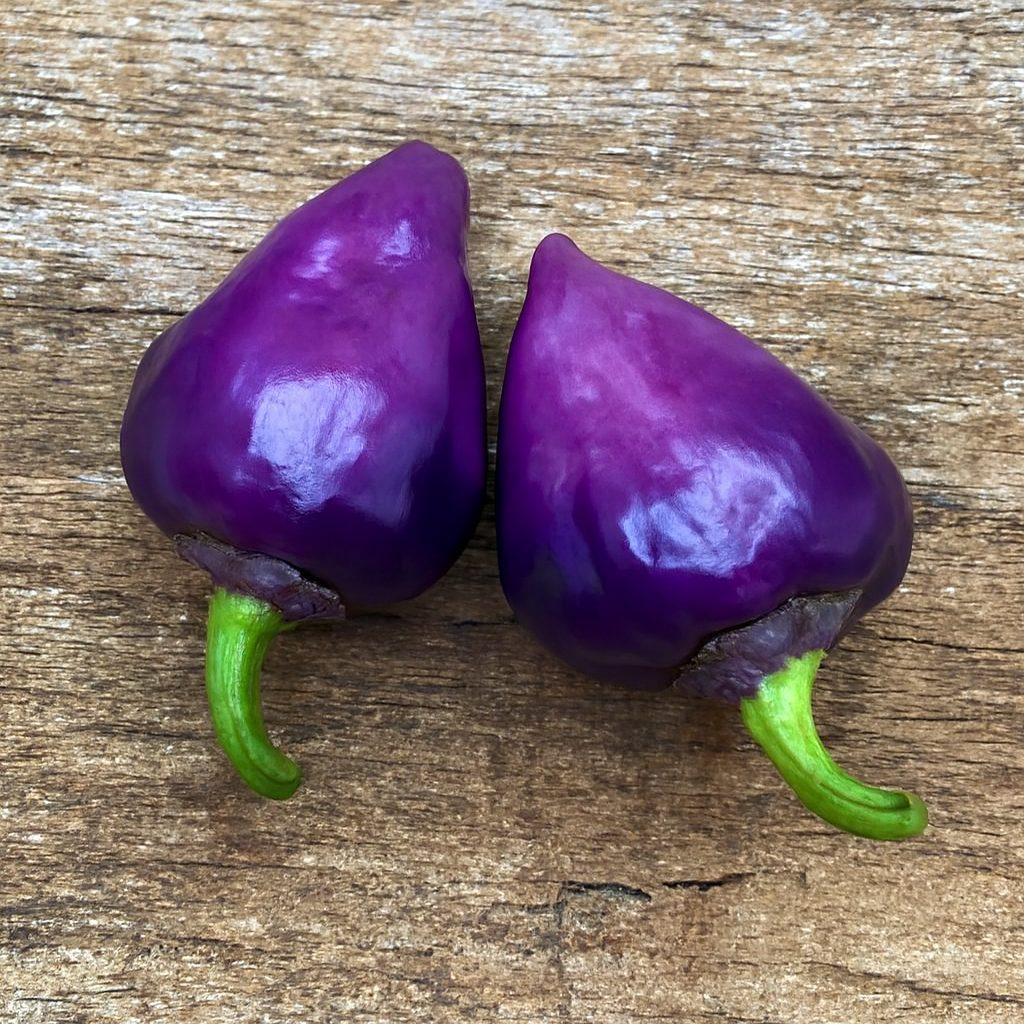
Description
Product Name: Purple UFO
Cultivar Name: Purple UFO
Species: Capsicum annuum
Common Names: UFO Purple
Type: Hybrid / Ornamental
Origin & Lineage
Geographic Origin:
The Purple UFO is a rare ornamental cultivar of unknown origin, believed to have emerged from European or South African breeding circles focused on aesthetic novelty and mid-heat culinary versatility. It is a relative of the Hungarian Hot Wax and other annuum types known for their bold coloration and saucer-like shapes.
Lineage & Breeder Notes:
While no single breeder claims formal authorship, the cultivar has been stabilized by growers such as Afterburn Grow in South Africa and Bohica Pepper Hut in the US. It is now considered a stable heirloom, open-pollinated and consistent in pod shape, color progression, and flavor.
Cultural Significance:
The Purple UFO is a favorite among ornamental collectors and culinary experimenters. Its saucer-like pods and dramatic color shifts—from violet to black to ruby red—make it a visual centerpiece in gardens and dishes alike. It’s often grown for:
• Garden aesthetics and conversation pieces
• Pickling and fermentation projects
• Artisan powders and sauces with visual flair
• Culinary storytelling in fusion dishes
Heat Profile
Scoville Rating (SHU):
Ranges from 30,000 to 45,000 SHU
Perceived Heat:
Medium; comparable to cayenne or a very hot jalapeño
Burn Characteristics:
Quick, sharp onset with a short duration. The heat is immediate but doesn’t linger, making it ideal for balanced spice applications
Flavor Profile
Tasting Notes:
• Unripe (purple): Mild, vegetal, slightly tangy
• Ripe (red): Sweet, fruity, with hints of apple and berry
Aftertaste / Finish:
Clean and juicy with a subtle smoky undertone
Ideal Pairings:
• Pickled with garlic and vinegar
• Fermented into kimchi or mash blends
• Roasted for salsa roja or chutneys
• Powdered for taco seasoning or dry rubs
• Added raw to salads and salsas for crunch and color
Fruit Characteristics
Shape:
Flat, disc-like with a tapered bottom—resembling a flying saucer
Size:
4 cm long × 3 cm wide
Color Stages:
• Immature: Vibrant violet
• Mid-stage: Deep purple to black
• Ripe: Ruby red
• Interior: Retains purplish hue even when mature
Wall Thickness:
Thin to medium; crisp when fresh
Texture & Skin:
Smooth, glossy, and firm with excellent crunch
Plant Details
Growth Habit:
Compact and bushy; ideal for containers or raised beds
Plant Height & Width:
Height: 80–130 cm depending on pot vs ground
Width: 50–70 cm
Foliage:
Dark green to purplish leaves; purple stems and flowers
Flower Color:
Purple
Days to Maturity:
80–90 days from transplant
Yield:
Moderate to high; prolific fruiting over extended season
Cultivation Information
Seed Count per Pack: 10 seeds
Germination Time: 7–14 days (Germinating Chilli Seeds)
Optimal Germination Temp: 24–30°C (Essential guide to ideal temperatures and humidity for chilli seed germination)
Light Requirements: Full sun or afternoon shade
Soil Preferences:
• pH: 6.0–7.0
• Loamy, well-draining soil enriched with compost (Easy DIY soil mixes)
• Benefits from volcanic rock dust and slow-release fertilizer
Watering:
Keep evenly moist; avoid overhead watering to prevent mildew
Support & Pruning:
Stake or cage once fruiting begins; pinch early flowers for stronger growth
Pest Management:
Watch for aphids and spider mites; neem oil or EM Control recommended
Overwintering:
Can be overwintered indoors under grow lights; prune back and maintain warmth
Notable Compounds
Capsaicinoid Content:
Moderate levels of capsaicin; concentrated in placenta
Pigments:
Anthocyanins drive purple coloration; carotenoids emerge during ripening
Volatile Flavor Compounds:
Linalool, methyl anthranilate, and esters contribute to fruity aroma
Culinary & Cultural Use
Traditional Uses:
None documented—modern ornamental with culinary crossover
Raw vs Cooked Flavor:
Raw pods offer crunch and color; roasting enhances sweetness and depth
Regional Dishes:
• South African pickled pepper jars
• Fusion tacos with purple UFO powder
• Fermented mash for artisan sauces
• Stir-fried with soy, ginger, and sesame
Storage / Drying / Preserving Tips:
• Dry whole or sliced for powder
• Pickle fresh for color retention
• Ferment with fruit for layered sauces


Reviews
There are no reviews yet.