
Description
Product Name: Pink Tiger Chilli Seeds
Cultivar Name: Pink Tiger
Species: Capsicum chinense
Common Names: Pink Tiger
Type: Hybrid
Origin & Lineage
Geographic Origin: The Pink Tiger pepper (Capsicum chinense) was developed in Italy. Multiple sources—including The Hippy Seed Company, Pepper Diaries, and Bohica Pepper Hut—confirm that this cultivar originated from Italian hobbyist breeders, most notably Mojo Pepper and Semi Strani di Carlo Martini, who specialize in rare ornamental superhot hybrids.
The cultivar is a deliberate cross between:
- Bhut Jolokia (Ghost Pepper) – a superhot from Northeast India known for its smoky, creeping burn
- Pimenta da Neyde – a Brazilian variety prized for its dark purple foliage and anthocyanin-rich pods
Italy’s climate and greenhouse infrastructure have made it a fertile ground for experimental pepper breeding, especially among collectors seeking visual novelty and extreme heat. The Pink Tiger was refined through open pollination and selection, with emphasis on color transitions, compact growth, and heat retention.
Though not officially registered or released by commercial seed houses, the Pink Tiger is now grown globally by ornamental collectors, fermentation artisans, and culinary stylists, with seeds traded through boutique vendors and enthusiast networks
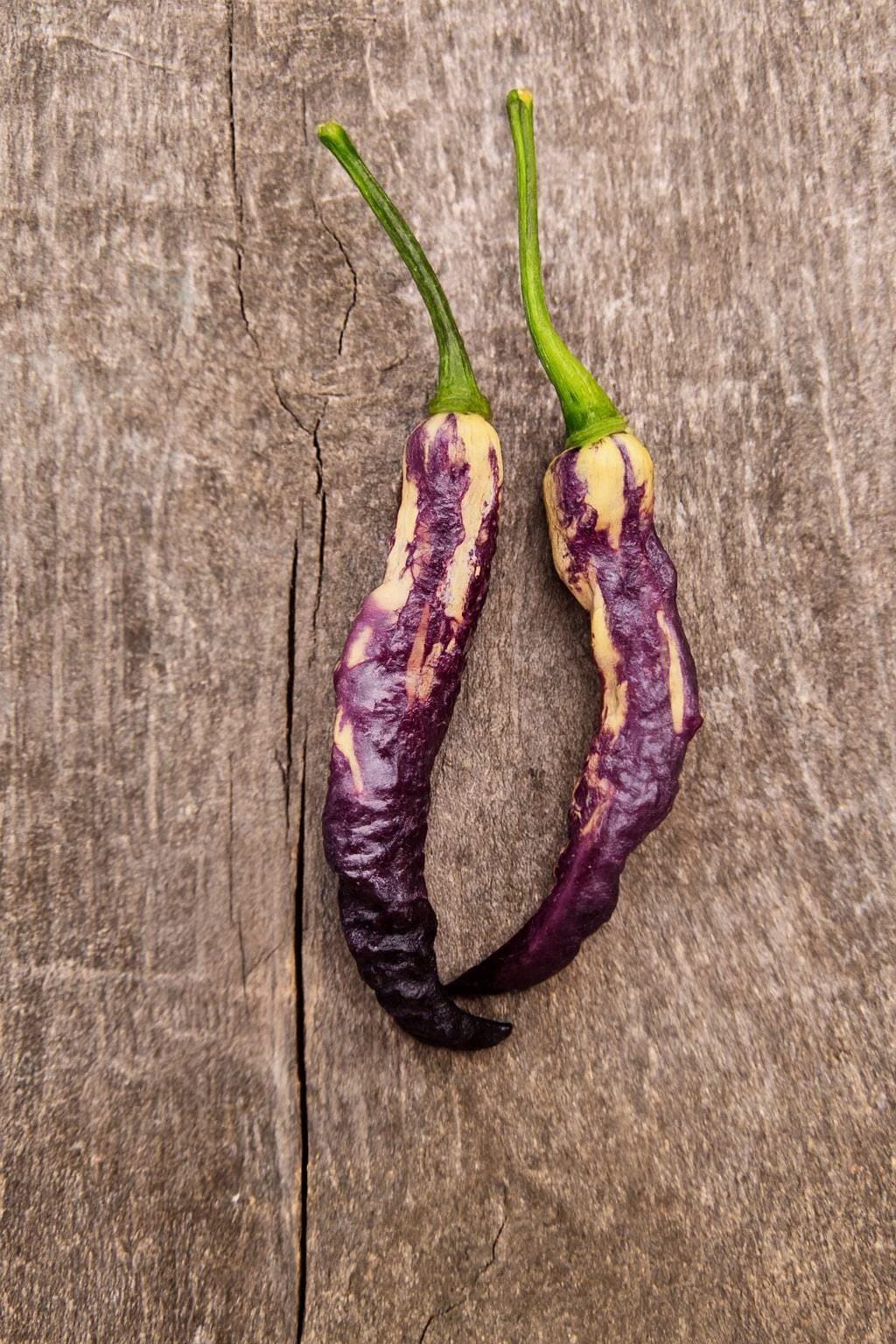
Cultural Significance: The Pink Tiger is celebrated for its ornamental brilliance and culinary firepower. Its pods begin as deep purple, then transition through cream, pink, and violet striping, often resembling miniature abstract paintings. This kaleidoscopic ripening process makes it a favorite in:
- Edible landscaping, especially in patio pots and raised beds
- Culinary plating, where its color and shape add visual drama
- Fermentation jars, where its thick walls and anthocyanin content enhance brine aesthetics
- Seed collector showcases, often featured in curated grow-outs and online forums
Flavor-wise, the Pink Tiger offers floral and perfumey notes, with a light bitterness and intense heat estimated between 200,000–350,000 SHU. Its burn is immediate and lingering, often compared to the Bhut Jolokia’s creeping sting.
Lineage / Hybridizer History: The Pink Tiger is an unofficial hybrid, created by Italian breeders through a cross between:
- Bhut Jolokia – for heat, pod shape, and smoky undertones
- Pimenta da Neyde – for anthocyanin expression, dark foliage, and ornamental traits
The hybrid was stabilized over multiple generations (likely F5–F7) through open pollination, with breeders selecting for:
- Multistage color transitions
- Compact growth habit
- High heat retention
- Visual consistency in striping and pod shape
While no single breeder is credited with the original cross, Mojo Pepper and Carlo Martini of Semi Strani are widely recognized for refining and distributing the cultivar. The Pink Tiger has since inspired numerous offshoots, including:
- Peach Tiger
- Orange Tiger
- Yellow Tiger
- Carolina Tiger – a cross with Carolina Reaper
These variants continue to expand the ornamental superhot category, blending botanical artistry with culinary intensity.
Heat Profile
Scoville Rating (SHU): 200,000–350,000 SHU
Perceived Heat: Extremely Hot
Heat Characteristics: Delayed onset with a creeping burn. Starts mild, then builds to a throat-stinging intensity. Not recommended for raw consumption unless you’re a seasoned heat lover.
Flavor Profile
Tasting Notes: Fruity and floral with a hint of bitterness. Less smoky than Ghost Pepper, but with a similar depth.
Aftertaste / Finish: Lingering heat with a slightly metallic edge
Ideal Pairings:
- Infused vinegars and oils
- Decorative hot sauces
- Pickled whole for visual impact
- Powdered for vibrant spice blends
- Garnishes for extreme dishes
Fruit Characteristics
Shape: Small, elongated pods with slight tapering
Size: 3–5 cm long, 1–2 cm wide
Color Stages:
- Immature: Deep purple
- Ripe: Pinkish-purple with occasional red blush
- Overripe: May darken to maroon
Wall Thickness: Thin
Texture & Skin: Smooth and glossy
Plant Details
Growth Habit: Compact and bushy
Plant Height & Width:
Height: 40–60 cm
Width: 30–50 cm
Foliage: Dark green to purple leaves with high anthocyanin content
Flower Color: Purple
Days to Maturity: 90–110 days from transplant
Yield: Moderate – 40–60 pods per plant under ideal conditions
Cultivation Information
Seed Count per Pack: 5 or 10 seeds
Germination Time: 10–14 days (Germinating Chilli Seeds)
Optimal Germination Temp: 25–30°C (Essential guide to ideal temperatures and humidity for chilli seed germination)
Light Requirements: Filtered sun
Soil Preferences:
- pH: 6.0–6.5
- Well-draining potting mix with compost (Easy DIY soil mixes)
- Benefits from calcium and potassium supplements
Storage Tips: Store seeds in a cool, dry place. Refrigeration at 4–8°C extends viability. Avoid moisture and direct light.
Notable Compounds
Capsaicinoid Content: High levels of capsaicin and nordihydrocapsaicin
Pigments: Anthocyanins drive purple coloration; capsanthin and capsorubin emerge during ripening
Volatile Flavor Compounds: Linalool, geraniol, and vanillin contribute to floral aroma
Culinary & Cultural Use
Traditional Uses: Not traditionally used due to ornamental focus. Gaining popularity in artisan sauces and decorative culinary applications.
Raw vs Cooked Flavor: Raw pods are sharp and floral. Cooking softens bitterness and enhances fruitiness. Drying intensifies color and aroma.
Regional Dishes:
- European-style infused oils
- Decorative pickling jars
- Artisan hot sauces with visual appeal
- Powdered for gourmet spice blends
Storage / Drying / Preserving Tips:
- Ideal for drying whole or sliced
- Retains color well when dehydrated
- Can be fermented for unique sauces


Reviews
There are no reviews yet.