
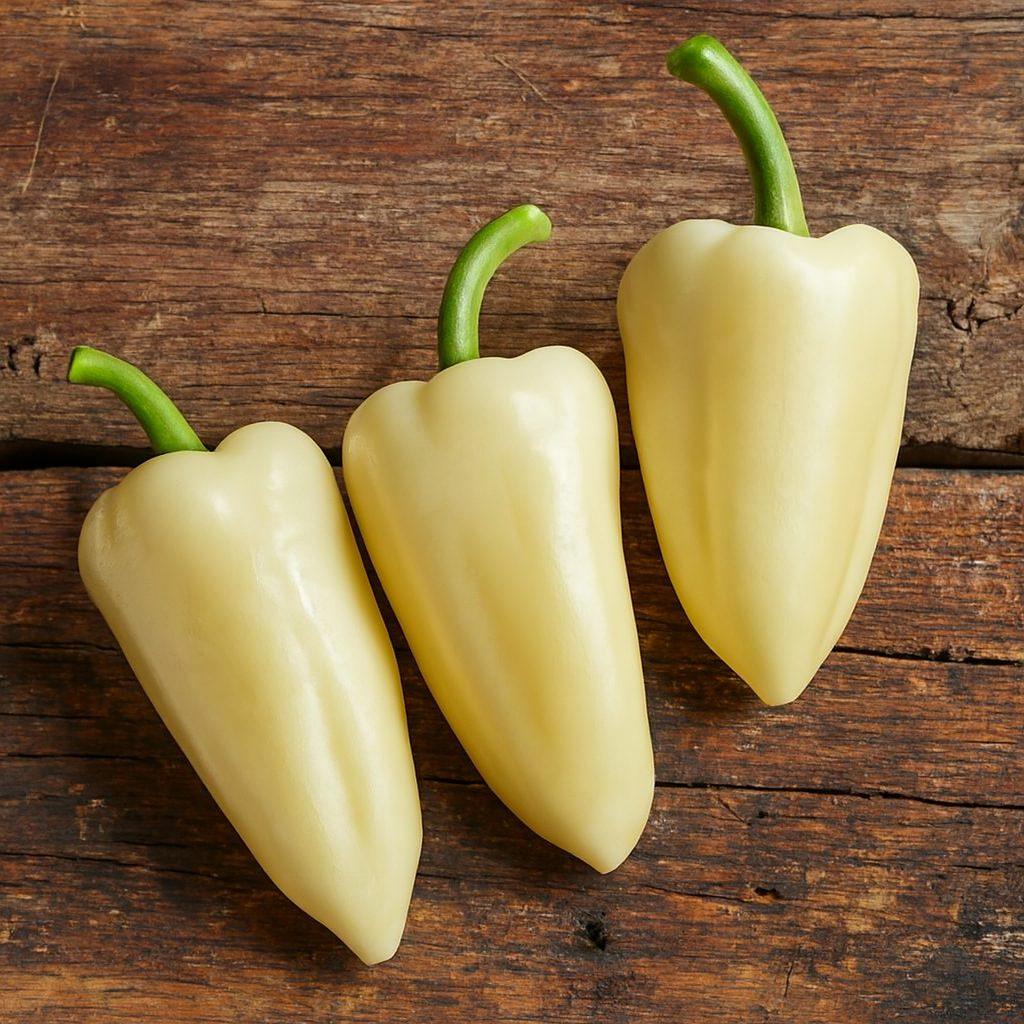
Description
Product Name: White Bell Pepper Seeds
Cultivar Name: White Bell Pepper
Species: Capsicum annuum
Common Names: White Bell, White Holland Bell Pepper
Type: Heirloom
Origin & Lineage
Geographic Origin: While bell peppers (Capsicum annuum var. grossum) trace their ancestral roots to Central and South America, particularly Mexico and Guatemala, the white variant is a product of European refinement, with Dutch horticulturists playing a pivotal role in its development.
Bell peppers were introduced to Europe in the 16th century by Spanish explorers, where they were quickly adopted into regional agriculture. The Netherlands, renowned for its advanced greenhouse technologies and controlled breeding programs, became a hub for cultivating visually novel and climate-sensitive pepper varieties. The White Bell Pepper emerged from this innovation—bred for low chlorophyll expression, mild sweetness, and aesthetic appeal.
Today, white bell peppers are grown globally, but remain rare and niche, often cultivated by:
- Heirloom growers in North America and Europe
- Specialty farms in Asia and Australia
- Greenhouse producers in Holland, where the “White Holland” strain originated
Their cultivation requires precise temperature control (18–24°C), filtered light, and nutrient-rich, well-draining soil, making them ideal for protected environments rather than open fields
Cultural Significance: White Bell Peppers are prized not only for their ghost-like appearance, but also for their subtle sweetness, low acidity, and crisp texture. Their rarity and visual impact have made them a favorite in:
- Gourmet plating, where pale tones contrast against vibrant sauces or dark proteins
- Stuffed dishes, especially when paired with herbs, grains, or cheeses that highlight their mild flavor
- Pickled blends, offering a visual break from red, green, and yellow peppers
- Food photography and culinary styling, where their ethereal hue adds elegance and intrigue
Symbolically, bell peppers are associated with abundance, creativity, and fertility across cultures. The white variant, in particular, evokes themes of purity, transformation, and rarity, often used in seasonal menus, chef’s gardens, and boutique seed catalogs.
In spiritual and cultural contexts, white peppers may represent clarity and renewal, aligning with their clean aesthetic and gentle taste. Their use in modern fusion cuisine reflects a growing trend toward color-conscious cooking, where visual storytelling is as important as flavor.
Lineage / Hybridizer History: White Bell Peppers are typically open-pollinated heirlooms, though some strains—especially those bred for greenhouse production—are hybridized for:
- Thicker walls, enhancing stuffing potential
- Uniform shape, ideal for commercial packaging
- Disease resistance, particularly in controlled environments
The “White Holland” designation refers to a specific greenhouse-bred line developed in the Netherlands, known for its especially pale skin, low chlorophyll, and consistent yield. These peppers are not genetically modified; their coloration results from natural mutations and selective breeding.
Other white variants may include:
- Albino peppers, which lack both chlorophyll and carotenoids, resulting in a pale yellow-white tone
- Ivory or cream bell peppers, which may ripen to soft yellow or blush tones depending on cultivar
Breeding efforts have focused on preserving sweetness, reducing bitterness, and enhancing shelf life, with some lines reaching stability by F5–F7 generations. While not widely available in commercial seed catalogs, white bell pepper seeds are offered by specialty seed banks, heirloom exchanges, and boutique growers.
Heat Profile
Scoville Rating (SHU): 0 SHU
Perceived Heat: None
Heat Characteristics: Completely sweet. No pungency or burn—ideal for raw use, stuffing, and roasting.
Flavor Profile
Tasting Notes: Mildly sweet with faint citrus and grassy undertones. The flavor is clean and refreshing, especially when raw.
Aftertaste / Finish: Crisp and juicy with no bitterness. The finish is light and palate-cleansing.
Ideal Pairings:
- Stuffed with rice, cheese, or grains
- Sliced raw into salads or slaws
- Roasted with olive oil and herbs
- Pickled with garlic and vinegar
- Blended into creamy sauces or dips
Fruit Characteristics
Shape: Blocky, rounded pods with 3–4 lobes
Size: 7–10 cm long, 5–8 cm diameter
Color Stages:
- Immature: Translucent white or pale green
- Ripe: Creamy white to ivory
- Overripe: May blush pale yellow or light orange
Wall Thickness: Thick
Texture & Skin: Smooth, glossy, and firm; crisp flesh with high moisture content
Plant Details
Growth Habit: Bushy and upright
Plant Height & Width:
Height: 60–90 cm
Width: 50–70 cm
Foliage: Bright green, broad leaves
Flower Color: White
Days to Maturity: 75–90 days from transplant
Yield: Moderate to high – typically 40–70 pods per plant under optimal conditions
Cultivation Information
Seed Count per Pack: 5 or 10 seeds
Germination Time: 7–14 days (Germinating Chilli Seeds)
Optimal Germination Temp: 24–30°C (Essential guide to ideal temperatures and humidity for chilli seed germination)
Light Requirements: Filtered sun
Soil Preferences:
- pH: 6.0–6.8
- Well-draining, fertile soil (Easy DIY soil mixes)
- Benefits from compost and calcium-rich feeding
Storage Tips: Store White Bell Pepper seeds in a cool, dry place. Refrigeration at 4–8°C extends viability. Avoid moisture and direct light.
Notable Compounds
Capsaicinoid Content: None – zero heat
Volatile Flavor Compounds: Hexanal and esters contribute to grassy aroma
Pigments: Low anthocyanin and carotenoid expression; pale coloration due to reduced chlorophyll and pigment synthesis
Culinary & Cultural Use
Traditional Uses: Not tied to traditional cuisine, but ideal for modern dishes requiring color contrast and sweetness
Raw vs Cooked Flavor: Raw White Bell Pepper pods are crisp and juicy. Cooking enhances sweetness and softens texture. Pickling preserves color and adds tang.
Regional Dishes:
- Mediterranean stuffed peppers
- Gourmet pickled pepper blends
- Creamy white pepper sauces
- Raw garnish for sushi or ceviche
Storage / Drying / Preserving Tips:
- Best preserved fresh or pickled
- Drying may dull color
- Powdered form is rare but usable in pale spice blends



Reviews
There are no reviews yet.